 admin
admin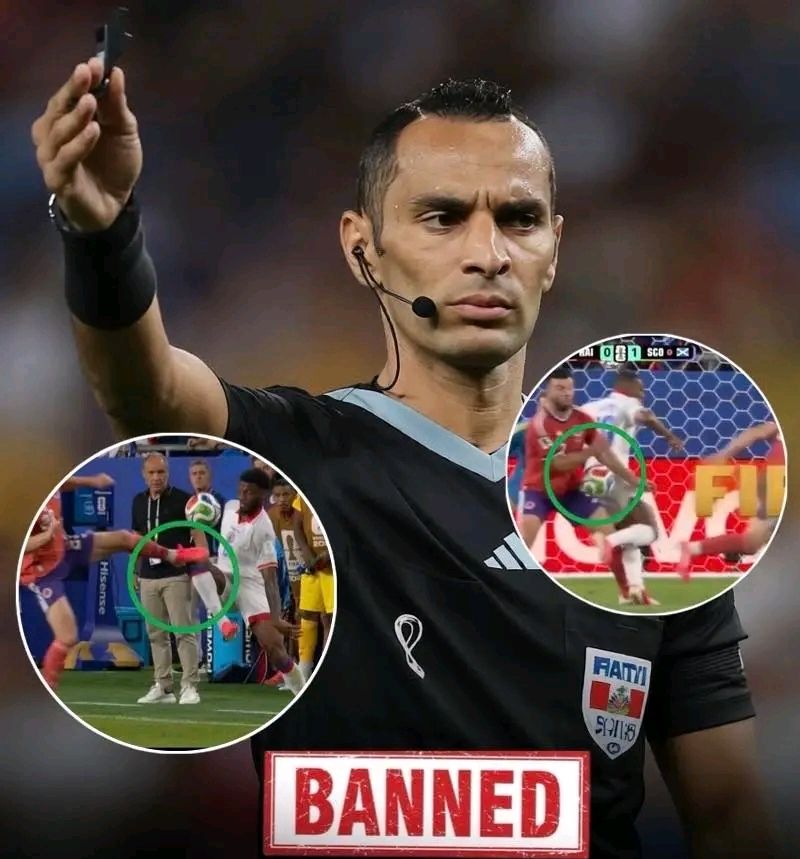
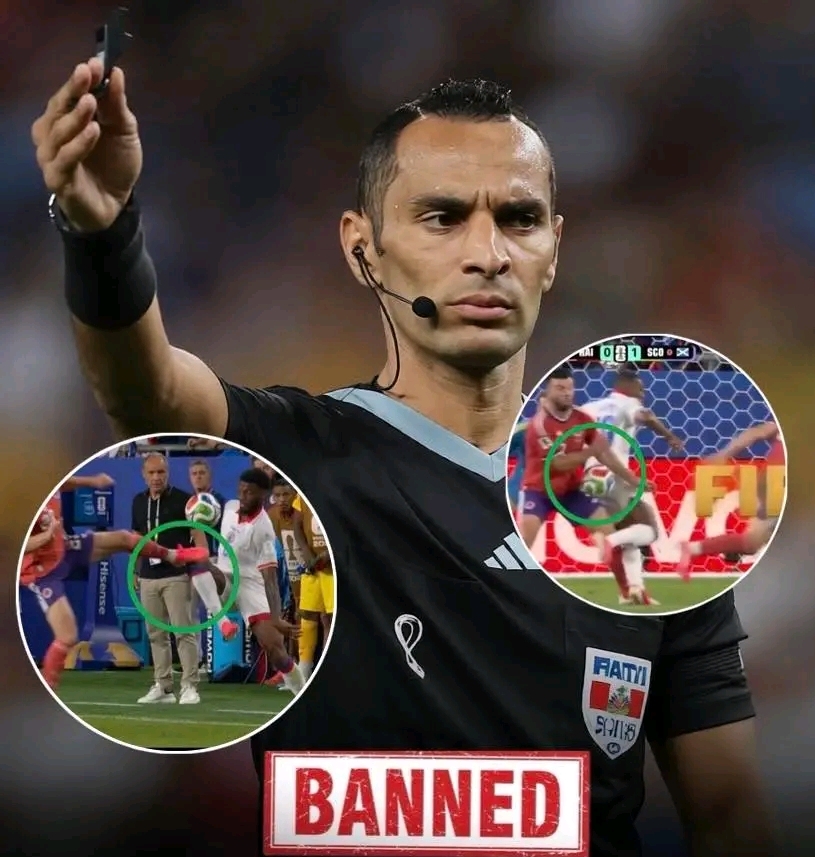
HAITI VS SCOTLAND REFEREE DROPPED FROM OFFICIATING ANY FURTHER WORLD CUP MATCHES
The controversy surrounding Scotland’s narrow 1-0 victory over Haiti at the FIFA World Cup has intensified after reports emerged that the Professional Game Match Officials Limited (PGMOL) has acknowledged two significant officiating errors during the Group C encounter.
The match, played at Boston Stadium, ended with Scotland securing all three points thanks to a first-half strike from John McGinn. While the result placed Steve Clarke’s side at the top of Group C following Brazil’s draw with Morocco, much of the post-match discussion has centered not on Scotland’s performance but on a series of contentious refereeing decisions that many believe had a direct impact on the outcome.
According to reports circulating in the aftermath of the game, PGMOL has accepted that officials failed to correctly assess two key incidents involving Haiti, decisions that have sparked widespread debate among supporters, pundits, and former referees.
A Match Overshadowed by Controversy
For long periods of the contest, Haiti proved more than capable of competing with their higher-ranked opponents. Despite entering the tournament as underdogs, the Caribbean nation played with energy, determination, and attacking intent.
Scotland took the lead in the 28th minute when McGinn capitalized on a fortunate deflection to score what ultimately proved to be the winning goal. However, as the match progressed, Haiti increasingly grew into the contest and created several dangerous opportunities.
The biggest talking points arrived in the second half when Haiti appealed for what they believed were clear penalties following separate handball incidents involving Scotland defender Grant Hanley.
On both occasions, Haitian players surrounded the referee demanding a spot kick. Yet the appeals were waved away, and play continued.
The decisions immediately triggered outrage among Haiti supporters and neutral observers watching around the world. Social media platforms were flooded with clips and screenshots of the incidents, with many insisting that at least one of the handball situations met the criteria for a penalty.
The First Alleged Error
The first controversial moment came when a Haiti attack resulted in the ball appearing to strike Hanley’s arm inside the penalty area.
While the referee judged the contact accidental and not punishable, replays led many analysts to question whether the defender’s arm was in a natural position.
Critics argued that the arm appeared extended away from the body, potentially increasing the defender’s silhouette and blocking the ball’s path.
Under modern interpretations of the handball law, such incidents are often subject to intense scrutiny. Although not every ball-to-hand contact results in a penalty, the consistency of decision-making remains a major point of discussion across the sport.
If reports of PGMOL’s review are accurate, officials may have concluded that Haiti should have been awarded a penalty in this instance.
The Second Handball Controversy
The second and perhaps more significant flashpoint occurred later in the match.
A powerful Haiti effort appeared to strike Hanley’s arm once again inside the penalty area. Players immediately appealed, convinced they had finally earned the opportunity to level the score from the spot.
Instead, the referee allowed play to continue, and VAR did not intervene.
The decision stunned many observers.
Television replays appeared to show clear contact between the ball and the defender’s arm, leading to renewed accusations that Haiti had been denied a legitimate chance to equalize.
Fans and commentators questioned not only the on-field decision but also the role of the Video Assistant Referee system, which was introduced specifically to correct clear and obvious errors.
The fact that no review resulted in a penalty only amplified frustration among Haiti supporters.
The Red Card Debate
Beyond the handball incidents, another controversial moment involved Scotland midfielder Kenny McLean.
Late in the match, McLean challenged Haiti’s Josue Casimir in a tackle that many viewers considered reckless.
Although the Scottish midfielder was shown a yellow card, some former players and analysts argued that the challenge endangered an opponent and therefore warranted a red card.
Had Scotland been reduced to ten men, the closing stages of the game could have unfolded very differently.
Reports suggest this incident formed part of the wider review into the officiating performance.
Whether officials regard the challenge as a missed dismissal remains a matter of debate, but it has become one of the defining images of the match.
Haiti’s Sense of Injustice
For Haiti, the controversy has only deepened the disappointment of an opening defeat.
Players left the field visibly frustrated, believing key decisions had gone against them.
Head coach and team representatives stopped short of launching a direct attack on the officials but made it clear they felt several moments deserved closer examination.
The sense of injustice has resonated strongly among Haitian supporters, many of whom feel their team’s impressive display was undermined by refereeing mistakes.
Instead of celebrating what could have been a famous World Cup point, Haiti was left reflecting on missed opportunities and disputed calls.
Scotland Focused on the Result
From Scotland’s perspective, the primary focus remains the victory.
After returning to the World Cup for the first time since 1998, securing three points in the opening match was viewed as essential.
Manager Steve Clarke acknowledged that improvements would be required against stronger opponents but praised his players for finding a way to win.
Scotland now faces crucial matches against Morocco and Brazil, fixtures likely to determine whether the Tartan Army can progress beyond the group stage.
While the controversy has dominated headlines, Scottish players have largely avoided becoming involved in the debate.
The Broader VAR Question
The events of Haiti versus Scotland have once again reignited football’s ongoing discussion about VAR.
Introduced to eliminate major mistakes, the technology remains one of the most divisive aspects of the modern game.
Supporters argue that it improves accuracy and fairness. Critics counter that inconsistent interpretations continue to produce confusion and controversy.
When high-profile incidents occur despite the presence of VAR, confidence in the system inevitably comes under scrutiny.
If an official review ultimately confirms that errors were made, questions will be asked about why the technology failed to identify and correct them in real time.
What Happens Next?
Should PGMOL or FIFA formally confirm that mistakes occurred, attention will shift toward accountability and lessons for future matches.
Historically, governing bodies have occasionally acknowledged officiating errors after major incidents, though such admissions rarely alter the result.
For Haiti, any acknowledgement would provide little consolation.
The result remains in the record books, Scotland retains its three points, and the Group C standings remain unchanged.
Nevertheless, official recognition of mistakes could fuel calls for improved officiating standards and greater transparency regarding VAR decisions.
As the World Cup continues, the Haiti versus Scotland encounter may be remembered not only for John McGinn’s winning goal but also for the refereeing controversy that followed.
Whether these disputed incidents ultimately influence the trajectory of Group C remains to be seen, but the debate surrounding them shows no sign of fading anytime soon.


 admin
admin