 admin
admin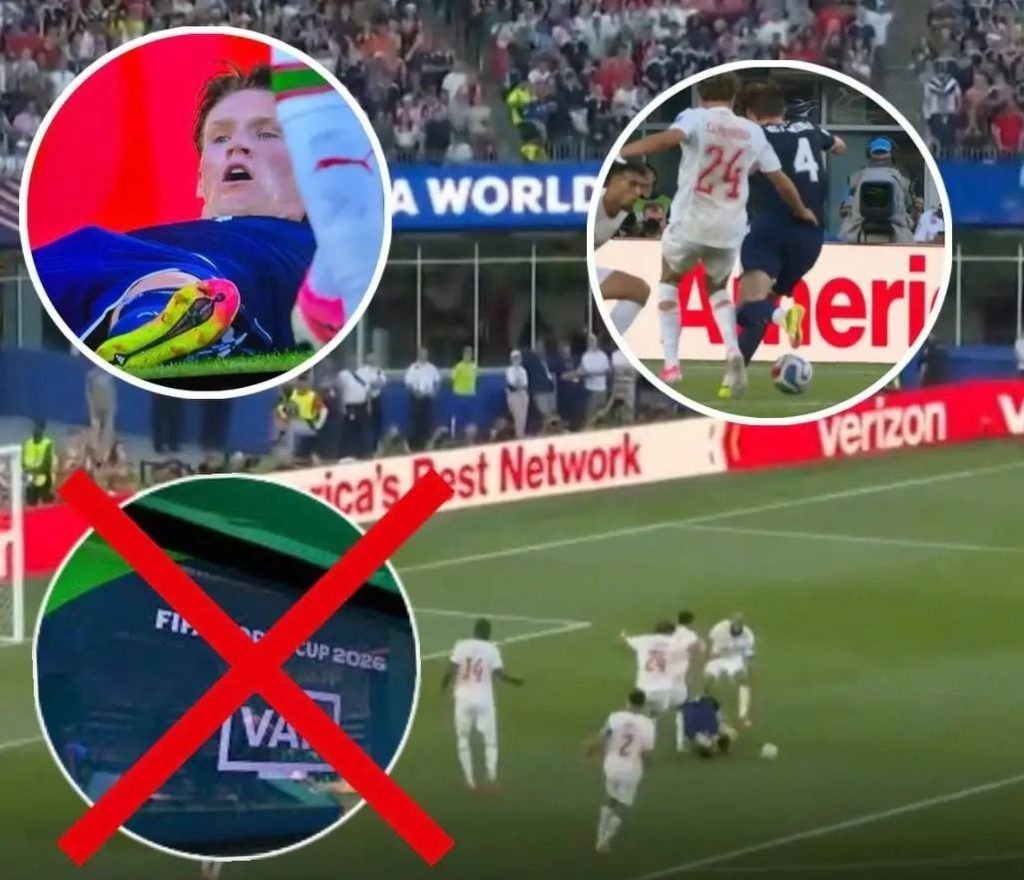
REASON WHY SCOTLAND’S PENALTY VAR CHECK WASN’T SHOWN EXPLAINED AFTER CONTROVERSIAL WORLD CUP CLASH
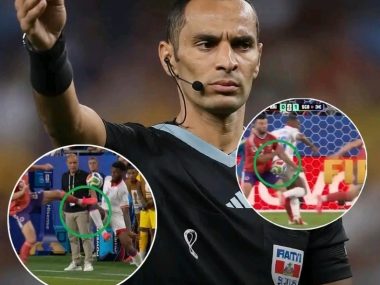
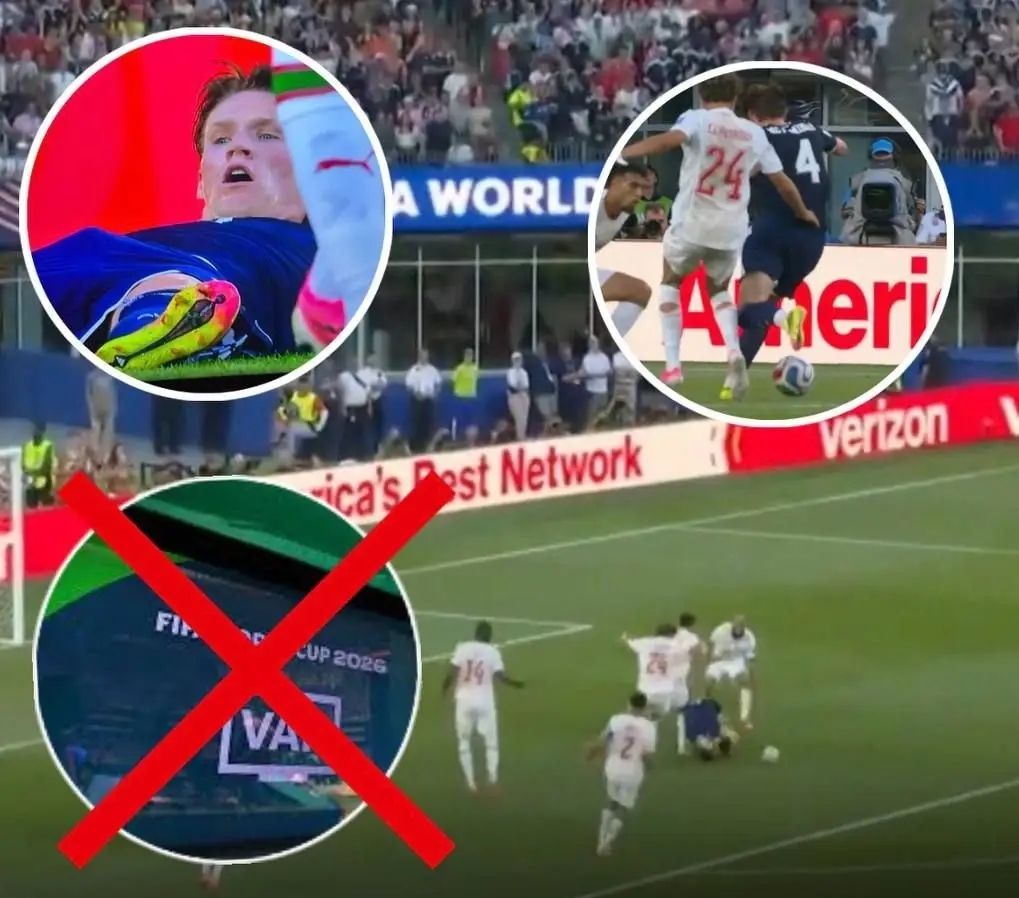
Scotland’s dramatic World Cup clash with Morocco has sparked fierce debate among supporters after a highly controversial penalty appeal involving Scott McTominay was waved away despite loud protests from players, coaches, and fans. The incident, which occurred late in the match with Scotland desperately chasing an equaliser, has quickly become one of the most discussed moments of the tournament.
Adding to the controversy was the fact that many viewers watching around the world did not see an obvious VAR review graphic or a lengthy stoppage, leading to confusion about whether the incident was checked at all. Social media exploded within minutes, with thousands of supporters questioning why the referee did not award a penalty and why television broadcasts appeared to move on so quickly.
As replays circulated online, opinions became sharply divided. Some believed Morocco defender Issa’s challenge clearly warranted a penalty, while others argued that the contact was either accidental or insufficient to justify intervention from the Video Assistant Referee.
The controversy has now raised broader questions about how VAR reviews are communicated during major international tournaments and why certain incidents appear to receive less public explanation than others.
The Incident That Sparked Outrage
The flashpoint occurred deep into the second half as Scotland pushed numbers forward in search of a crucial goal.
Scott McTominay drove into the Moroccan penalty area as defenders attempted to close him down. During the challenge, the Scottish midfielder went to ground and immediately appealed for a penalty. Several teammates surrounded the referee, convinced that contact had been made inside the box.
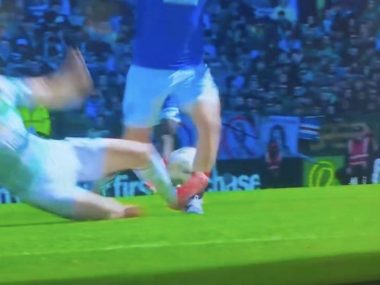
Television replays quickly showed a coming together between McTominay and the defender, with one angle appearing to suggest contact around the foot and lower leg area.
Scotland’s players were visibly convinced that they had a legitimate claim.
The reaction from McTominay himself perhaps said the most. After the decision was allowed to stand, cameras captured the midfielder lying on the turf in disbelief before eventually getting back to his feet.
For supporters watching at home, it seemed inevitable that VAR would intervene.
Yet moments later play resumed.
No penalty.
No lengthy review.
No overturn.
The decision immediately became a major talking point.
Why Many Fans Thought A Penalty Would Be Given
Modern football has conditioned supporters to expect almost every significant incident inside the penalty area to be reviewed.
Whenever a player goes down in the box following contact, viewers often anticipate several minutes of analysis from VAR officials.
In Scotland’s case, the images appeared dramatic.
One replay angle suggested that McTominay’s foot may have been caught during the challenge. Another showed both players making contact while attempting to reach the ball.
For many fans, the visual appearance alone was enough to conclude that a foul had occurred.
Social media users immediately began sharing screenshots and slowed-down clips, arguing that the defender had stepped on or clipped McTominay.
The controversy grew even further because Scotland were trailing at the time, meaning the decision potentially had a significant impact on the outcome of the match.
Whenever a crucial call occurs in a decisive moment, emotions naturally run high.
Why The VAR Check Was Not Shown
One of the biggest sources of confusion was the belief that VAR had somehow ignored the incident.
However, under FIFA protocols, every potentially match-changing incident is automatically checked by the Video Assistant Referee, regardless of whether viewers see a graphic on screen.
This means the moment McTominay went down, VAR officials would have immediately begun reviewing the footage from multiple camera angles.
Importantly, not every VAR check results in a formal on-screen review.
Many supporters assume that if they do not see the referee standing beside the pitch monitor, no review has taken place.
That is not how the system works.
The vast majority of VAR reviews actually occur silently in the background.
Officials in the VAR room analyse the footage while the referee waits for confirmation.
If the VAR believes the on-field decision is clearly wrong, the referee is then advised to conduct an on-field review.
If the VAR believes the original decision is supportable and not a “clear and obvious error,” play simply continues.
As a result, television viewers may never see a lengthy stoppage despite the incident being checked thoroughly.
This appears to be the explanation behind Scotland’s controversial penalty appeal.
The “Clear And Obvious Error” Standard
A key principle of VAR is often misunderstood by fans.
VAR does not re-referee matches.
Its purpose is not to determine whether a different decision could have been made.
Instead, officials are tasked with identifying whether the referee has made a clear and obvious mistake.
This distinction is crucial.
Even if some observers believe a penalty should have been awarded, VAR will not intervene unless the evidence strongly demonstrates that the referee’s original decision was clearly incorrect
Football remains a subjective sport.
Different referees may interpret the same challenge differently.
As long as the on-field decision falls within an acceptable range of interpretation, VAR generally avoids intervention.
In the McTominay incident, officials seemingly concluded that the contact did not reach the threshold required to overturn the referee’s judgment.
That does not necessarily mean there was no contact.
Rather, it suggests the contact was not considered sufficient to prove a clear refereeing error.
Why The Referee Was Not Sent To The Monitor
Another question repeatedly asked by supporters concerns the absence of an on-field review.
Fans often assume that any controversial incident should automatically result in the referee consulting the pitch-side monitor.
Again, FIFA’s VAR protocol works differently.
The monitor is only used when VAR believes the referee should reconsider the original decision.
If VAR officials agree with the on-field assessment or believe the evidence is inconclusive, there is no reason to recommend a review.
Consequently, the referee remains with the original decision.
This is likely why viewers never saw the official walk over to the monitor despite the intensity of Scotland’s protests.
The Different Camera Angles
One reason opinions remain divided is that various camera angles appear to tell slightly different stories.
Some replays seem to indicate contact between the players.
Others suggest McTominay may already have been losing balance as he attempted to control the ball.
This is often the challenge facing VAR teams.
Supporters usually focus on a single freeze-frame that supports their argument.
Officials, however, examine multiple angles, full-speed footage, slow-motion replays, and the overall context of the challenge.
A freeze-frame can sometimes exaggerate the appearance of contact.
For that reason, referees are instructed not to base decisions solely on still images.
Instead, they analyse the complete action from beginning to end.
It is entirely possible that what appeared obvious from one angle looked much less convincing from another.
Scotland’s Frustration
Regardless of the technical explanation, Scotland’s frustration is understandable.
World Cup matches are often decided by the smallest margins.
Players train for years dreaming of performing on football’s biggest stage.
When a potentially decisive decision goes against them, emotions inevitably run high.
McTominay’s reaction reflected the feelings of many Scottish supporters watching around the globe.
The midfielder appeared convinced he had been fouled.
His teammates shared that belief.
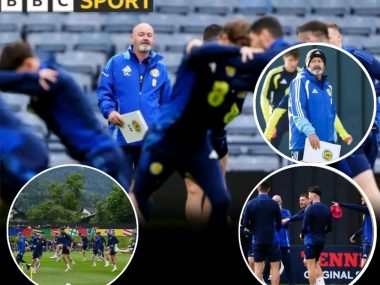
The Scottish bench also showed visible frustration following the decision.
For those involved, the explanation that the incident was checked may offer little comfort if they remain convinced a penalty should have been awarded.
Morocco’s Perspective
From Morocco’s point of view, the officials reached the correct conclusion.
Defenders frequently argue that attackers initiate contact or exaggerate incidents in an attempt to win penalties.
Moroccan supporters have pointed to the fact that VAR reviewed the challenge and chose not to intervene.
To them, that serves as confirmation that the referee’s original judgment was valid.
This difference in interpretation highlights why football controversies rarely disappear quickly.
The same replay can produce completely opposite conclusions depending on which team a supporter follows.
The Growing Debate Around VAR Communication
Perhaps the most important issue raised by the incident is communication.
Many of the complaints stem not from the decision itself but from the lack of visible explanation.
Supporters increasingly want transparency.
When a controversial call is reviewed, fans often expect clear communication about what was checked and why a particular conclusion was reached.
Several competitions around the world have experimented with greater openness regarding VAR decisions.
Some leagues have released audio conversations between officials after matches.
Others have provided detailed written explanations.
Many fans believe FIFA could do more in this area.
Had viewers been immediately informed that the challenge had undergone a complete VAR review and failed to meet the threshold for intervention, some confusion may have been avoided.
A Familiar Theme In Modern Football
The McTominay incident is far from the first VAR controversy and is unlikely to be the last.
Since the technology’s introduction, football has witnessed countless debates involving handballs, offside decisions, penalty appeals, and red-card incidents.
While VAR has corrected many clear mistakes, it has also created new arguments about consistency and interpretation.
Supporters generally agree that obvious errors should be corrected.
Disagreement arises when incidents fall into the grey area between clear fouls and acceptable physical contact.
Scotland’s penalty appeal appears to belong firmly within that category.
Reasonable observers can look at the same footage and reach different conclusions.
That reality makes such incidents particularly difficult for officials.
Conclusion
The reason Scotland’s controversial penalty appeal did not result in an on-field VAR review appears to be straightforward: officials reviewed the incident in the background and concluded that the referee had not made a clear and obvious error.
Although many fans expected a penalty after seeing the replays, FIFA’s VAR system does not intervene simply because contact occurs or because another decision could have been justified. Intervention only takes place when evidence clearly demonstrates that the original call was wrong.
As a result, the referee was not sent to the monitor, the decision remained unchanged, and play continued.
Whether supporters agree with that outcome is another matter entirely.
For Scotland fans, the images of McTominay on the ground and the apparent contact inside the penalty area will likely remain a source of frustration for years to come. For Morocco supporters, the decision will be viewed as proof that the officials got the call right.
What is certain is that the incident has reignited the debate surrounding VAR transparency, communication, and consistency at the highest level of international football—ensuring that this controversial World Cup moment will continue to be discussed long after the final whistle.

 admin
admin