 admin
admin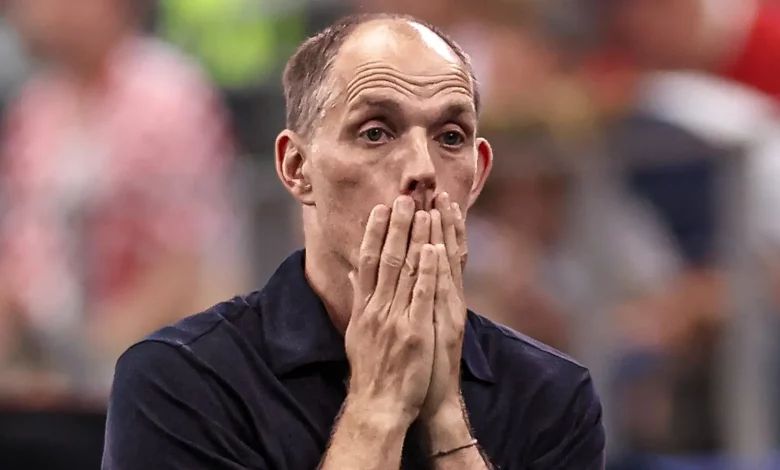
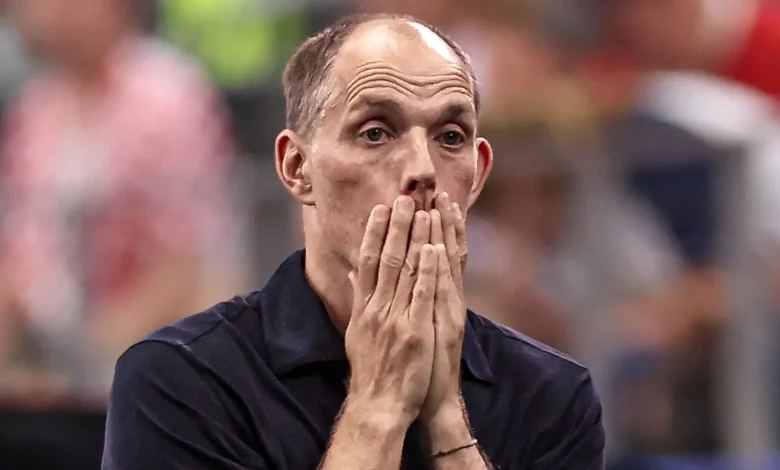
THOMAS TUCHEL TELLS ENGLAND STAR, YOU’LL NEVER PLAY FOR ME AGAIN
In the sweltering heat of a Georgia evening, England secured a hard-fought 2-1 victory over the Democratic Republic of Congo in the Round of 32 of the 2026 FIFA World Cup. Harry Kane’s late brace rescued the Three Lions from what would have been a humiliating early exit.
However, the post-match narrative has been dominated not by celebration, but by reports of a furious confrontation in the dressing room. Thomas Tuchel, the no-nonsense German coach tasked with ending England’s decades-long trophy drought, allegedly delivered a devastating message to one of his established stars: “You’ll never play for me again.”
The victory itself was a microcosm of England’s tournament so far—resilient yet unconvincing, technically superior but lacking the fluidity expected of a squad brimming with Premier League and Champions League talent. DR Congo, marshalled by a mix of European-based professionals including familiar Premier League faces like Yoane Wissa and Aaron Wan-Bissaka, took a shock seventh-minute lead through Brian Cipenga. For long stretches, the underdogs frustrated England with disciplined defending and dangerous counter-attacks.
Kane, ever the talisman, equalised in the 75th minute before firing home a winner 11 minutes later, sending England through to a Round of 16 clash against co-hosts Mexico. Yet sources close to the camp describe a tense atmosphere in the aftermath, with Tuchel reportedly isolating one senior player for what he perceived as a lack of commitment and tactical discipline during the contest.
The Incident Unfolds
While the Football Association has remained tight-lipped, multiple outlets suggest the player in question is a high-profile midfielder or forward who has featured prominently under previous regimes but has struggled to fully adapt to Tuchel’s high-pressing, structurally rigid system. Insiders claim Tuchel, known for his demanding standards from his time at Chelsea and Bayern Munich, confronted the player directly in the dressing room. He cited repeated failures to track back, poor positional awareness, and a perceived lack of hunger in a match where England were expected to dominate.
“You’ll never play for me again,” Tuchel is said to have stated bluntly, according to accounts shared with select journalists. The remark echoes the German’s history of making tough calls—dropping established names during his club tenures and prioritising collective cohesion over individual reputations.
This is not the first sign of friction. Throughout the build-up to the knockout stage, Tuchel had emphasised the need for “cool heads” and patience against defensive blocks, warning players against frustration or deviation from the game plan. DR Congo’s setup, with deep-lying midfielders and rapid transitions, tested exactly those qualities. England dominated possession but created limited clear-cut chances until Kane’s interventions. Substitutions, including Marcus Rashford and Bukayo Saka, helped shift the momentum, but the performance highlighted ongoing questions about squad depth and tactical flexibility.
Tuchel’s Vision vs. Reality
Since taking over as England manager, Tuchel has sought to impose a more pragmatic, high-intensity style compared to the possession-oriented approach of his predecessor. He has made bold squad selections, omitting some household names in favour of players who fit his pressing triggers and defensive organisation. Injuries to key figures like Reece James have further complicated matters, forcing adaptations such as deploying Djed Spence or Ezri Konsa at right-back.
The DR Congo match exposed lingering vulnerabilities. Despite the presence of Jude Bellingham and Declan Rice, England’s midfield occasionally looked overrun in transitions. The forward line, reliant on Kane’s hold-up play and finishing, lacked consistent support. Critics argue that the exclusion of certain creative talents has left the team blunt against low blocks—a recurring theme in recent friendlies and group-stage outings.
Tuchel’s post-match comments, delivered with characteristic intensity in the mixed zone, focused on the positives: progression, character under pressure, and the importance of “small margins” in knockout football. He praised Kane’s leadership and clinical edge, while acknowledging the “nerve-racking” nature of breaking down committed opponents. Yet behind the measured public words, the private message was clear—standards will not be compromised, even in victory.
Profile of a Potential Exile
While the player’s identity remains unconfirmed officially, speculation has centred on individuals whose club form has not always translated seamlessly to the international stage under the new regime. A player with significant caps but perhaps seen as a “legacy” selection rather than a Tuchel favourite would fit the profile. Past examples in international football—such as managers ruthlessly culling senior figures to signal a new era—abound. Think of Vicente del Bosque’s handling of certain Spanish stars or Joachim Löw’s reshaping of Germany.
For the player concerned, the implications are profound. At this stage of a World Cup campaign, exclusion could signal the end of their international career, especially if younger, hungrier alternatives impress in subsequent rounds. England’s squad is competitive, with emerging talents eager to seize opportunities. A public or private falling-out risks not only immediate omission but also long-term damage to the player’s standing.
The timing is particularly delicate. England now face Mexico in what promises to be a cauldron of an atmosphere at the Estadio Azteca. Any dressing-room discord could undermine morale at a critical juncture. Conversely, Tuchel’s iron-fist approach may galvanise the group, reinforcing that no one is undroppable.
Broader Context: England’s World Cup Journey
England entered the 2026 tournament as one of the favourites, boasting a golden generation of talent across multiple positions. Qualification was comfortable, yet the group stage revealed inconsistencies: solid wins interspersed with draws against well-organised African and Central American sides. The DR Congo tie was billed as a potential banana skin, and so it proved until Kane’s heroics.
Tuchel was appointed with a clear mandate: deliver silverware. His contract runs through the tournament, with an extension likely hinging on deep progression. Public support remains strong, but patience among fans and media is finite. The “nearly men” tag from previous tournaments—semi-finals, final heartbreak—looms large. A quarter-final exit would be viewed as failure.
Analysts point to several factors shaping England’s campaign. Fitness concerns in defence, the integration of hybrid full-backs, and the balance between creativity and defensive solidity remain live issues. Tuchel’s preference for intensity without overexposure was evident; he has repeatedly cautioned against “freaking out” when results do not come immediately.
The African challenge exemplified modern tournament football: motivated underdogs with diaspora talent making life difficult for European heavyweights. DR Congo’s goalkeeper Lionel Mpasi produced several outstanding saves, while their counter-attacking threat kept England honest. Wan-Bissaka’s familiarity with several opponents added an intriguing subplot.
Implications for Squad Harmony and Tactics
Should the reported ultimatum hold, Tuchel will need to reshuffle quickly. Potential replacements depend on the position. In midfield, options like Morgan Rogers or Eberechi Eze could step up. In attack, depth exists but relies on form and fitness. The move would also send a ripple effect through the squad: accountability is non-negotiable.
Longer term, this incident highlights the psychological demands of major tournaments. Managing egos, maintaining focus amid intense scrutiny, and balancing rotation with rhythm are perennial challenges. Tuchel’s German efficiency meets English expectation—a volatile mix that has already produced sparks.
Fans, watching from packed pubs and fan zones back home, will likely be divided. Some will applaud the decisiveness; others will worry about destabilising a squad that has shown character in adversity. Social media has erupted with debates over the unnamed player’s merits and Tuchel’s man-management style.
Looking Ahead: Mexico and Beyond
The Round of 16 encounter against Mexico represents a significant step up in quality and occasion. Co-hosts with passionate support, Mexico will bring flair, physicality, and home-continent advantage. England must improve their chance creation and defensive transitions if they are to advance.
Kane’s form is a major positive. The forward’s leadership and finishing remain world-class. Jude Bellingham’s dynamism offers another focal point. Yet the collective must elevate. Tuchel’s tactical tweaks—perhaps greater width, adjusted pressing triggers, or midfield rotations—will be under the microscope.
Injuries remain a concern. The absence of certain defenders has forced improvisation, and any further setbacks could prove costly. Depth, once a strength, is being tested by the demands of a condensed schedule in a vast host nation spanning the US, Canada, and Mexico.
A Defining Moment for Tuchel’s England
The reported dressing-room ultimatum, whether fully accurate or amplified by sources, encapsulates the high stakes of international management. Tuchel is not here to manage egos or preserve reputations; he is here to win. His willingness to confront a senior player after a victory—albeit an unconvincing one—underscores that philosophy.
England have the talent to go far. Whether they possess the unity, discipline, and adaptability demanded by their coach will determine if this tournament ends in glory or another chapter of “what if.” As the team prepares for Mexico, one thing is certain: under Thomas Tuchel, complacency will not be tolerated.
The drama off the pitch may yet fuel performance on it. Or it could mark the beginning of fractures. For now, England march on—bruised, battle-tested, and acutely aware that in Tuchel’s world, every performance is an audition.

 admin
admin