 admin
admin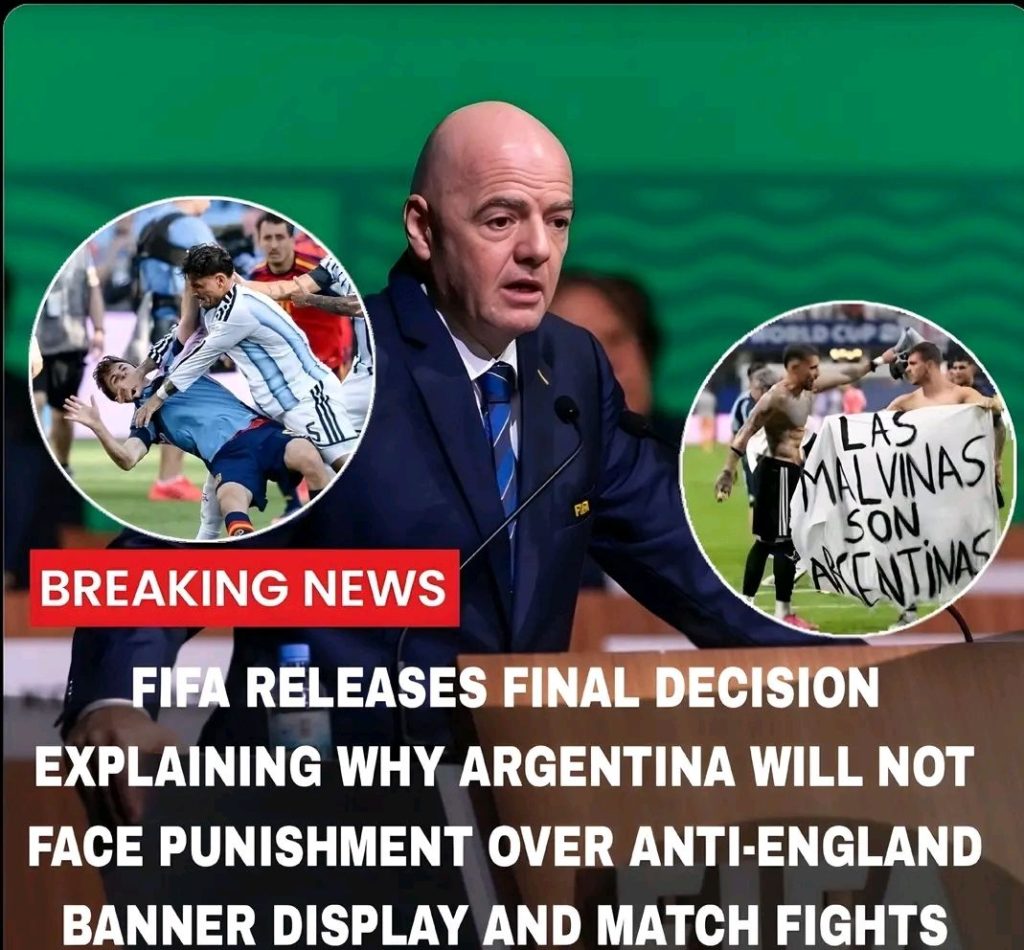
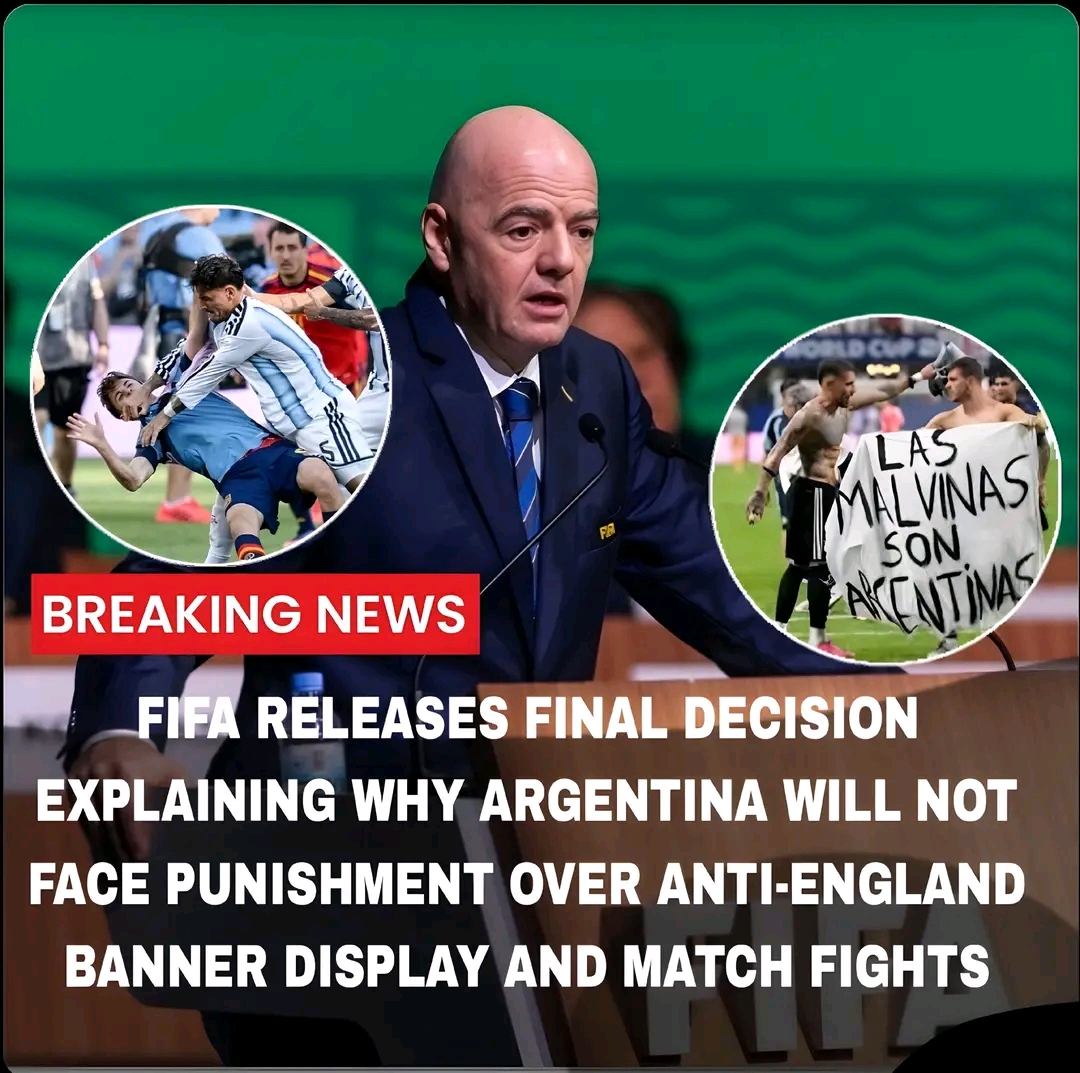
FIFA Explains Why Argentina Will Not Face Punishment Over Anti-England Banner and Match Clashes
FIFA has reportedly reached its final decision regarding the controversy surrounding Argentina following the recent international fixture against England, concluding that no further disciplinary action will be taken over the anti-England banner displayed by some supporters or the confrontations that occurred around the match.
The decision has sparked widespread debate across the football world, with supporters from both nations expressing contrasting views over whether stronger action should have been taken. In the days following the match, speculation intensified on social media, where many fans expected football’s governing body to announce sanctions against Argentina after footage of the banner and heated post-match clashes circulated online.
According to the reported findings, FIFA determined that there was insufficient evidence to justify additional sporting sanctions against the Argentina national team or the Argentine Football Association. The governing body’s disciplinary process reportedly concluded that the available evidence did not establish a breach of FIFA regulations by the team, its players or its officials that would warrant further punishment.
The decision has immediately divided opinion among football supporters. Many England fans have argued that FIFA should apply its disciplinary rules consistently, regardless of the nation involved, insisting that incidents capable of increasing tensions between rival supporters should be addressed firmly.
On the other hand, many Argentina supporters have welcomed the reported verdict, arguing that isolated incidents involving sections of the crowd should not overshadow the football itself or result in sanctions against the national team without clear evidence of responsibility.
The controversy has once again highlighted the complex nature of FIFA’s disciplinary procedures. While emotional scenes often accompany high-profile international fixtures, football’s governing body generally distinguishes between the behaviour of supporters and the conduct of players, coaching staff and national associations when considering disciplinary measures.
In most cases, FIFA examines whether a federation can reasonably be held responsible for incidents before deciding whether sanctions are appropriate. Such investigations typically involve reviewing referee reports, security observations, video footage and any additional evidence submitted after the match.
The fixture itself had already been played in an intense atmosphere, with several flashpoints occurring during the contest before tensions continued after the final whistle. Heated exchanges between players and staff attracted significant attention from broadcasters and fans, prompting widespread calls for an official review.
Whenever confrontations occur during or after major international matches, FIFA routinely assesses the incidents to determine whether disciplinary regulations have been breached. However, sanctions are generally imposed only when there is sufficient evidence linking misconduct directly to players, officials or the national association.
The reported conclusion suggests that, despite the widespread discussion generated by the anti-England banner and post-match altercations, FIFA did not find enough grounds to hold Argentina officially accountable under its disciplinary code.
The decision has reignited broader conversations about consistency in football governance, with supporters questioning where responsibility begins and ends when incidents involve fans rather than participants on the pitch. Others argue that governing bodies must carefully balance protecting freedom of expression among supporters with maintaining respect and preventing behaviour that could inflame rivalries.
Football has long been built on passionate rivalries, particularly when two historic footballing nations meet. While emotional atmospheres are often part of the spectacle, governing bodies continue to stress the importance of ensuring that competitive passion does not escalate into unacceptable conduct.
Although debate over FIFA’s reported decision is unlikely to disappear anytime soon, the governing body’s stance appears to bring the disciplinary process to a close, allowing both teams to move forward while discussions over consistency, accountability and fan behaviour continue throughout the football community.
Editor’s note: FIFA has established disciplinary procedures for reviewing match incidents. If no official FIFA disciplinary statement confirming this specific decision has been published, aspects of the reported outcome should be treated as unverified until formally confirmed by the governing body.


 admin
admin