 admin
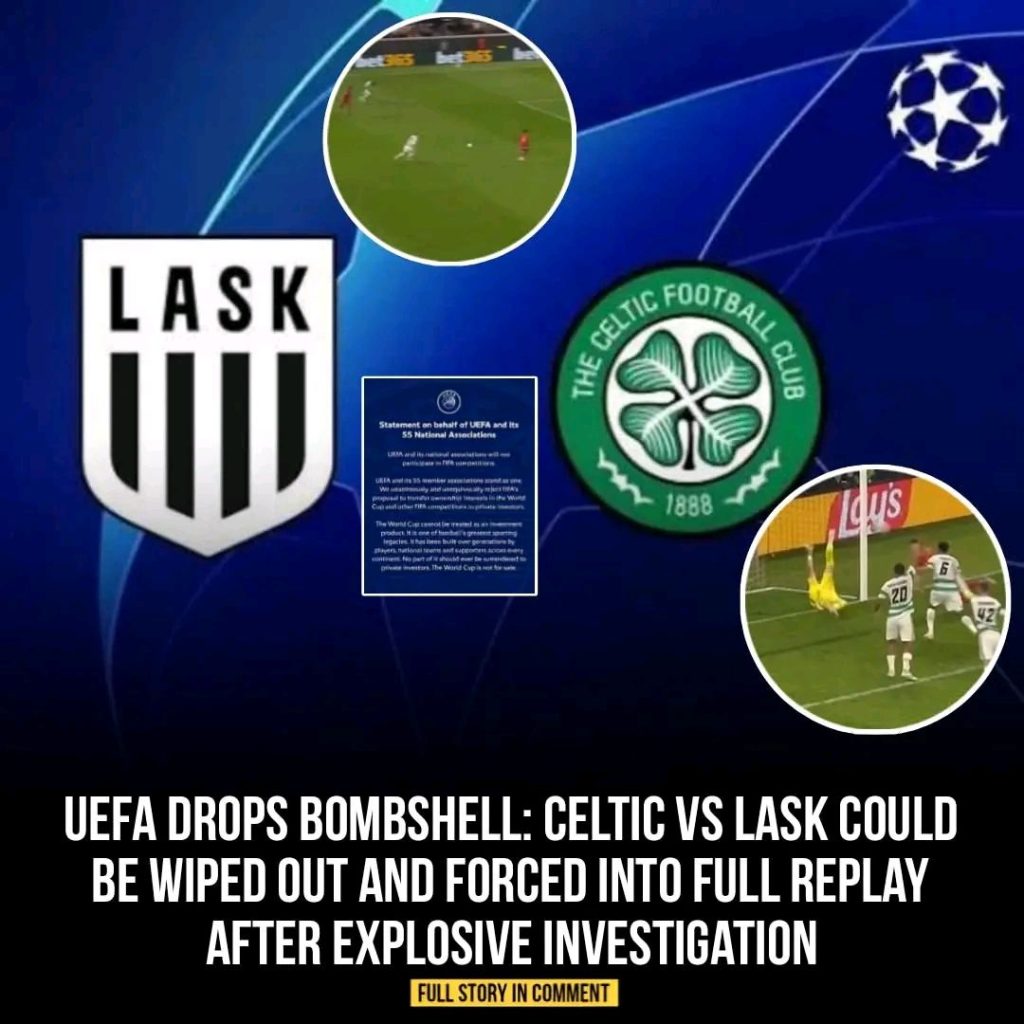
UEFA EXPLODES: Celtic-LASK Match Faces TOTAL REPLAY After Jaw-Dropping Investigation Rocks European Football
UEFA Official Statement Rocks European Football: Celtic vs LASK Faces Possible Full Replay After Serious Investigation into Champions League Play-Off Chaos
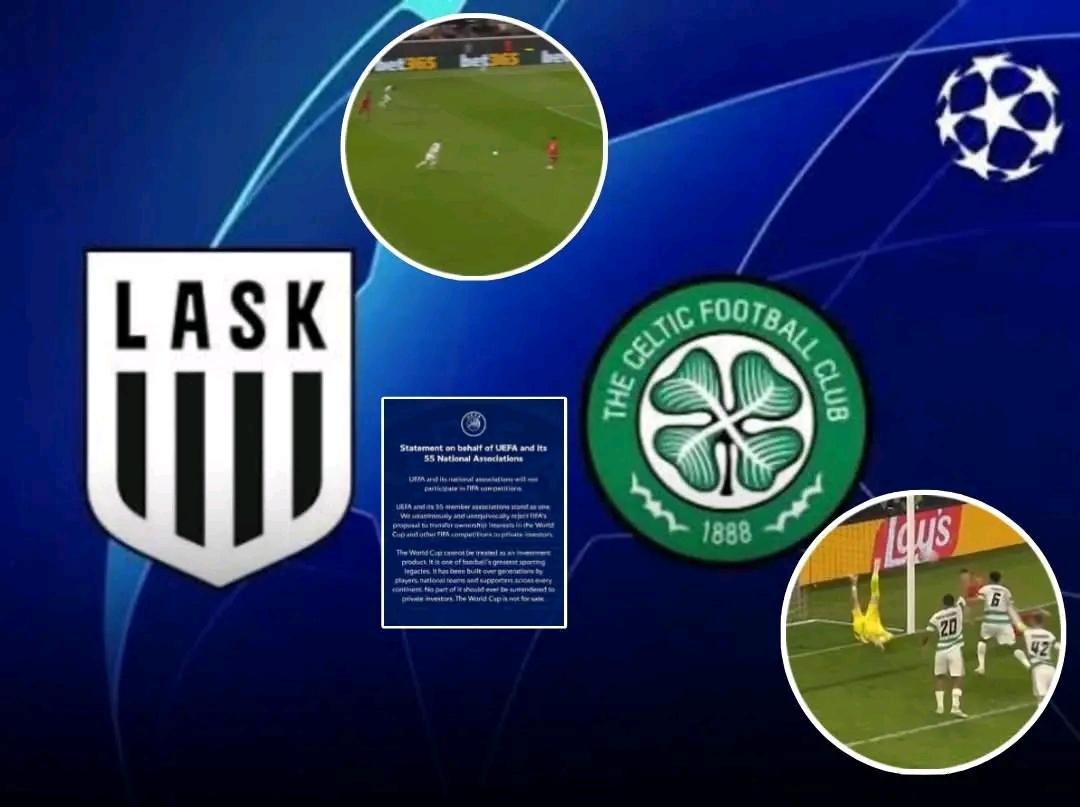
In a development that has sent shockwaves through Scottish and Austrian football and beyond, UEFA has released an official statement confirming that a serious investigation is underway into the UEFA Champions League play-off tie between Celtic and LASK. The governing body has indicated that the possibility of a full or partial replay remains open depending on the findings. The announcement, issued just days after one of the most dramatic and controversial collapses in recent European football history, has left fans, players, and club officials reeling.
The second leg, played on Tuesday night at the Raiffeisen Arena in Linz, saw LASK overturn a commanding 3-0 first-leg deficit in extraordinary fashion. Celtic, managed by Martin O’Neill, had looked set for a comfortable passage into the Champions League league phase after Callum McGregor’s early goal extended their aggregate lead to 4-0. What followed was a night of pure football theatre and, for Celtic supporters, pure nightmare. LASK scored five times, including a late equaliser that forced extra time and a decisive strike in the additional period, to win 5-1 on the night and 5-4 overall. The Austrian side booked their place in the lucrative league phase, while Celtic were condemned to the Europa League for another season.
UEFA’s statement, released through official channels, is carefully worded but unambiguous in its seriousness. It notes that “following the conclusion of the UEFA Champions League play-off second leg between LASK and Celtic FC, and in light of multiple reports and formal submissions received, the UEFA administration has opened a formal investigation into several aspects of the fixture.” The statement continues that “all options available under the UEFA Disciplinary Regulations and competition regulations, including the potential ordering of a replay in whole or in part, remain under active consideration pending the outcome of the inquiry.” No specific timeline has been given, though sources close to Nyon suggest that preliminary findings could emerge within days, with a full decision expected before the league-phase fixtures begin in earnest.
The investigation is understood to encompass a range of issues that have been raised in the immediate aftermath of the match. While UEFA has not publicly detailed every element under review, reports circulating among European football journalists point to concerns over refereeing decisions, the application of VAR protocols, stadium security arrangements, and the overall conduct of the fixture under the intense pressure of a high-stakes play-off. The match was officiated by experienced Polish referee Szymon Marciniak, who had previously handled major finals, with Dutch official Pol van Boekel on VAR duties. Several key moments, including the validity of Florian Flecker’s stoppage-time equaliser that forced extra time, underwent lengthy VAR checks. Although the goals stood, the volume of controversy surrounding marginal calls has clearly prompted formal scrutiny.
Celtic’s collapse has already been described by many as one of the most humiliating European exits in the club’s modern history. Leading 4-0 on aggregate after 21 minutes, the Scottish champions appeared to freeze. Moses Usor pulled a goal back before half-time. After the interval Robert Ljubičić and Samuel Adeniran struck from distance to reduce the aggregate deficit to a single goal. Then, deep into stoppage time, substitute Florian Flecker nodded home to level the tie at 4-4 and send the contest into extra time. Adeniran’s second goal in the 109th minute completed the extraordinary turnaround. A late penalty was saved by Celtic goalkeeper Viljami Sinisalo, but it proved academic. LASK had achieved what many considered impossible.
The financial implications alone are enormous. Qualification for the Champions League league phase brings guaranteed revenue estimated in the region of £30-40 million depending on further progress and market pool shares. For Celtic, the second consecutive failure to reach that stage represents a significant blow to both prestige and the balance sheet. For LASK, a club of more modest means, the qualification is transformative, delivering a windfall that can reshape their future. Any decision to order a replay would throw these financial calculations into chaos and raise complex questions about player welfare, fixture congestion, and the integrity of the competition calendar.
UEFA’s willingness to consider a replay is rare but not entirely without precedent. Historically, the governing body has ordered matches to be replayed or partially replayed in cases involving serious refereeing errors that fundamentally altered the outcome, major security breaches, or technical failures that compromised the fairness of the contest. One well-documented example involved a partial replay after a clear and decisive error in the application of the laws of the game. More commonly, UEFA has imposed fines, stadium bans, or points deductions rather than full replays. The threshold for ordering an entire tie to be replayed is deliberately high precisely because of the logistical and sporting disruption it causes.
In this instance, the “serious investigation” language used by UEFA suggests that the complaints received have met that elevated threshold for formal examination. Celtic are understood to have lodged formal observations, though the club has remained publicly measured in its comments while the process runs its course. LASK, understandably, have expressed confidence that the result will stand and that their players delivered a performance of historic proportions under intense pressure. Austrian media have celebrated the “miracle of Linz,” while Scottish outlets have dissected every tactical and psychological failing that contributed to Celtic’s disintegration.
The timing of the UEFA statement is particularly sensitive. The Champions League league-phase draw was scheduled for 27 August, just two days after the second leg. Any decision to replay the tie would force UEFA to adjust the entire competition structure for the affected clubs. LASK’s place in the draw would be placed in limbo, and Celtic’s Europa League path would similarly be disrupted. Broadcasters, sponsors, and national associations would all face secondary consequences. The UEFA administration is therefore under pressure to move with both speed and absolute fairness.
Beyond the immediate sporting and financial stakes, the investigation raises broader questions about the modern game. The relentless intensity of European qualifying, the pressure placed on players and officials, the increasing scrutiny of every VAR decision through slow-motion analysis and social media, and the emotional investment of large fanbases all contribute to an environment in which controversy is almost inevitable. Celtic supporters, already frustrated by last season’s play-off exit to Kairat Almaty, have voiced deep anger and demands for accountability. LASK fans, by contrast, have revelled in the underdog story of the season so far.
Martin O’Neill, returning to the Celtic dugout with a wealth of experience, took full responsibility in his post-match comments, describing the night as “majorly disappointing” and acknowledging that his side should have managed the game far better once they held a four-goal aggregate lead. Captain Callum McGregor similarly accepted that the players had been too passive after scoring the early goal. Those admissions of on-pitch failure do not, however, preclude legitimate questions about whether external factors—refereeing, VAR application, or other procedural issues—may have influenced the outcome in ways that require correction.
UEFA’s process typically involves the Control, Ethics and Disciplinary Body, which can examine evidence including match reports, video footage, referee assessments, and submissions from the clubs involved. Independent experts may be consulted on technical matters such as offside technology or goal-line systems if relevant. The parties are given the opportunity to present their case before any decision is reached. Appeals to the UEFA Appeals Body remain possible, and in extreme cases further recourse to the Court of Arbitration for Sport exists, though that route is lengthy and rarely used for competition integrity issues of this nature.
As the investigation proceeds, speculation will inevitably intensify. Some observers believe a full replay is unlikely given the high bar UEFA has traditionally set. Others argue that the sheer scale of the collapse, combined with the volume of contentious moments and the formal complaints received, makes this an exceptional case. Partial measures—such as ordering the match to be restarted from a particular point, or imposing sporting sanctions short of a full replay—remain possible. Fines, reprimands to officials, or recommendations for improved protocols are more conventional outcomes.
Whatever the final decision, the episode has already highlighted the fine margins and enormous pressures of elite European football. For Celtic, a club with a proud European heritage and a passionate global support, the result represents another painful chapter in recent qualifying campaigns. For LASK, it is a night that will live forever in the club’s history, regardless of any subsequent administrative review. And for UEFA, the investigation tests its commitment to fairness, consistency, and the protection of competition integrity in an era of heightened scrutiny.
The coming days and weeks will determine whether the remarkable events in Linz stand as one of the great comebacks of the modern game or become the subject of an unprecedented sporting reset. UEFA has made clear that the process will be thorough and that no option, including the nuclear one of a full replay, has been taken off the table. In the meantime, both clubs must prepare for every eventuality while the rest of European football watches with intense interest.
The statement has already dominated headlines across the continent. Scottish media have framed it as a potential lifeline after catastrophe. Austrian coverage has struck a more defiant tone, emphasising the legitimacy of LASK’s achievement on the pitch. Neutral observers note that UEFA’s willingness even to open the door to a replay signals the gravity with which the submissions have been treated. In the high-stakes world of Champions League football, where millions of euros, sporting prestige, and institutional reputation are all on the line, few stories generate more intrigue than the possibility that a result already written into the record books might yet be rewritten.
As the formal investigation continues, one truth remains undeniable: the night of 25 August 2026 in Linz produced drama of the highest order. Whether that drama ultimately requires administrative correction is now a matter for UEFA’s careful deliberation. The football world waits.

 admin