 admin
Premier League Penalty Decision Comes Under Fresh Scrutiny After New Footage From Everton’s 2-2 Draw With Manchester United
A controversial refereeing decision from Everton’s dramatic 2–2 draw with Manchester United has come under fresh scrutiny after new footage appeared to offer another look at one of the biggest talking points from the match.
The encounter at Hill Dickinson Stadium already had almost everything.
Four second-half goals.
Two stunning Everton strikes.
Manchester United twice taking the lead.
A late Benjamin Šeško header that appeared to have won the game for the visitors.
And then, with virtually the final attack of the match, Ainsley Maitland-Niles produced an outrageous long-range finish to rescue a point for David Moyes’ side.
But amid all the drama, attention has now returned to an incident that happened much earlier in the contest.
And Everton supporters have every reason to look at the footage again.
The incident that started the debate
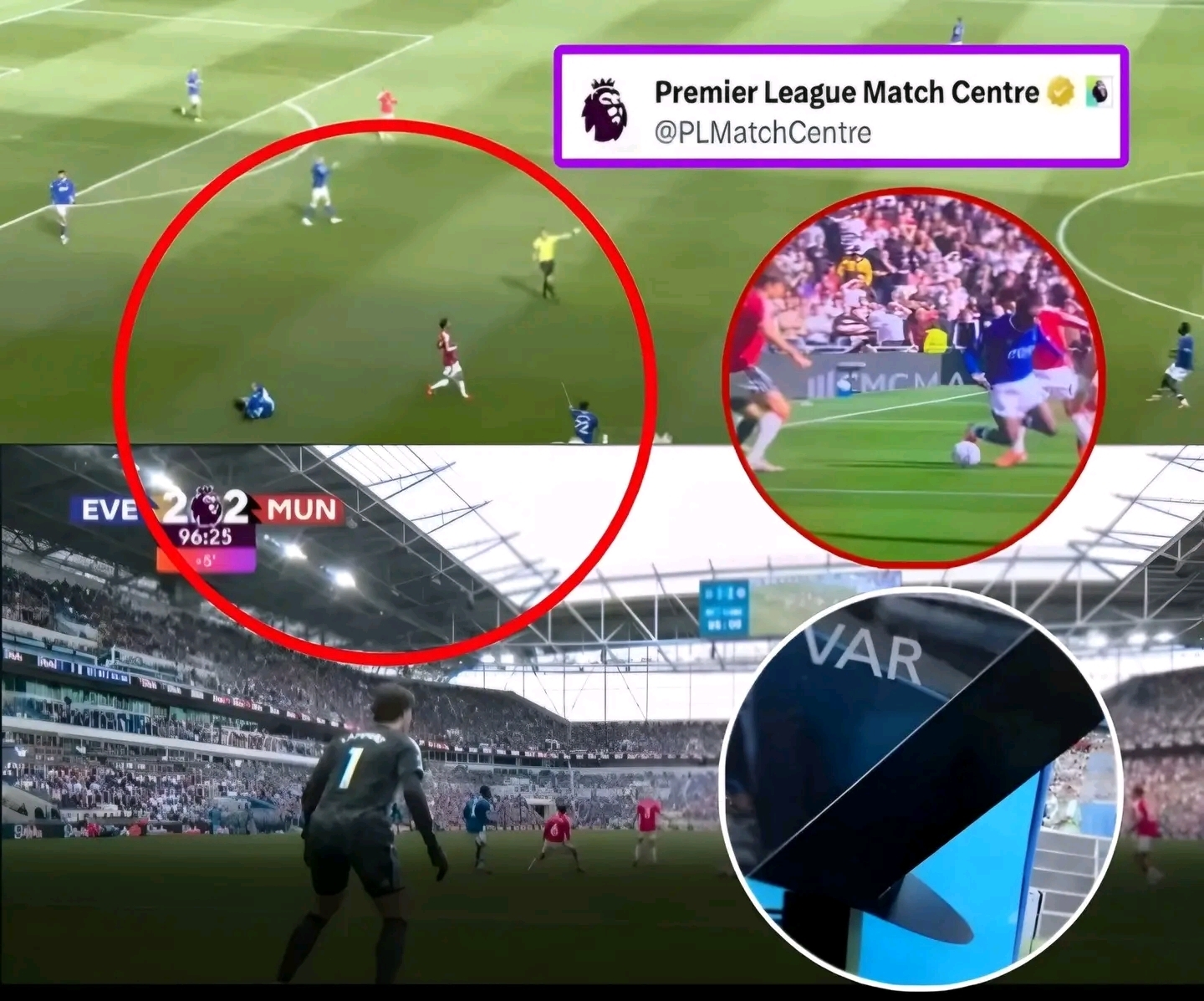
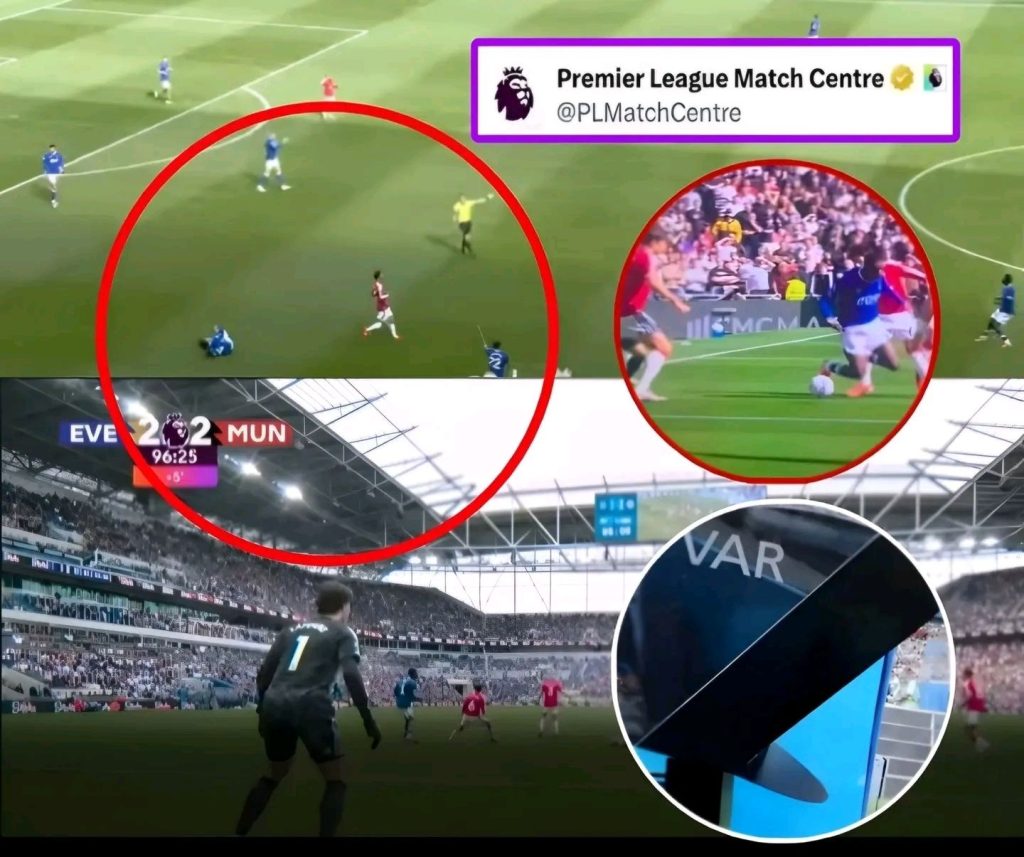
During the opening stages, Everton striker Thierno Barry went down inside the Manchester United penalty area while attempting to get onto a dangerous ball.
The Everton players immediately appealed for a spot-kick.
The referee, however, was unmoved.
Play continued and there was no penalty awarded.
At the time, the decision appeared relatively straightforward from the referee’s position.
But whenever an incident inside the penalty area becomes controversial, the replay inevitably becomes the judge.
And that is exactly what has happened.
Fresh footage has once again brought the moment into the spotlight, with fans debating whether Barry was genuinely brought down or whether he went looking for the contact.
Some angles make the Everton striker appear to initiate the fall, while others have led supporters to question whether there was enough pressure from the Manchester United defender to warrant a closer examination.
The debate has therefore continued long after the final whistle.
Was it actually a penalty?
This is where things become particularly interesting.
The available match coverage indicates that there was little evidence of significant contact, with one match report describing the appeal as an attempted dive and noting that Barry arguably should have been booked.
That makes the decision not to award a penalty understandable.
However, football fans rarely agree when an incident like this is involved.
For Everton supporters, the frustration comes from the fact that their side could easily have been awarded a penalty had the officials interpreted the situation differently.
And considering how the match eventually unfolded, that early decision suddenly feels even more significant.
Everton were ultimately forced to fight until the final seconds to rescue a point.
Then came the Tarkowski controversy
As if the Barry incident wasn’t enough, another penalty debate emerged during the second half.
This time, the focus shifted to Everton captain James Tarkowski.
Manchester United were threatening through Marcus Rashford and Matheus Cunha, with Rashford producing one of his most dangerous runs of the afternoon before attempting to put the ball into Cunha’s path.
Cunha appeared to have a huge opportunity.
But Tarkowski reacted brilliantly.
The Everton defender launched himself into a last-ditch challenge and managed to get a crucial touch on the ball.
Manchester United appealed.
Everton supporters held their breath.
And referee John Brooks allowed play to continue.
VAR checked the incident but did not recommend that Brooks go to the pitch-side monitor.
That decision also generated debate.
Was it a perfectly timed tackle?
Or was Tarkowski dangerously close to catching Cunha before making contact with the ball?
Former Aston Villa midfielder Lee Hendrie, working as a co-commentator, acknowledged that it was a risky challenge because of where it happened.
But his overall assessment was that Tarkowski had timed it correctly and that the decision not to award a penalty was the right one.
The footage tells an interesting story
This is why the latest discussion is so fascinating.
The two incidents were almost mirror images of each other in terms of the debate they generated.
Barry went down and wanted a penalty.
Tarkowski challenged Cunha and Manchester United wanted one.
Yet neither resulted in a spot-kick.
And both decisions have now been revisited by supporters looking at different angles.
For the officials, the key question in each case was whether the evidence showed enough contact and wrongdoing to justify awarding a penalty.
For supporters, however, the interpretation is inevitably influenced by which team they support.
Everton eventually had the last laugh
Perhaps the biggest irony is that neither decision ultimately decided the match.
Everton refused to collapse.
Manchester United had taken control after Bryan Mbeumo opened the scoring shortly after half-time with an excellent individual finish.
But Tyrique George produced a stunning strike in the 83rd minute to bring Everton level.
Then came the cruelest blow for the home side.
Šeško rose to meet Luke Shaw’s cross and headed Manchester United back in front in the 88th minute.
At that stage, it appeared United had done enough.
The visitors were seconds away from leaving Merseyside with all three points.
But Everton had other ideas.
Deep into stoppage time, the ball fell to Maitland-Niles on his Everton debut.
What happened next was extraordinary.
The deadline-day signing unleashed a spectacular long-range effort that flew into the top corner, sending the stadium into absolute chaos and securing a 2–2 draw.
It was a finish that completely changed the narrative of the match.
Manchester United will feel they let it slip
For Michael Carrick’s side, the result will undoubtedly feel like two points dropped.
United had led twice.
They had created opportunities.
Bruno Fernandes had struck the crossbar, while Marcus Rashford caused problems throughout the afternoon.
And Šeško’s late header looked to have delivered the victory.
But United’s defensive concentration deserted them at the worst possible moment.
Maitland-Niles was allowed the space to produce a moment of brilliance, and the rest is now Premier League history.
United have also conceded at least twice in each of their opening three league matches, highlighting a defensive problem that Carrick will need to address quickly.
Everton’s resilience could prove crucial
For Moyes, however, the result was another demonstration of the character he wants from his players.
Everton entered the game following a hugely frustrating transfer window, with their squad depth becoming a major talking point.
Yet they remain unbeaten after three Premier League matches.
And perhaps more importantly, they have shown an ability to fight until the final whistle.
That was certainly the case against Manchester United.
The penalty controversy will continue to generate discussion, particularly now that supporters have more footage to examine.
But Everton will probably care very little.
They were twice behind.
They were seconds away from defeat.
And somehow, they walked away with a point.
The officiating decisions may continue to divide opinion, but one thing is beyond debate:
Everton refused to give up.
And after Maitland-Niles’ incredible last-gasp equaliser, it is Manchester United who will be left wondering how they managed to let victory slip through their fingers.


 admin