 admin
🚨 PGMOL Under Pressure After Controversial VAR Decision Sparks Huge Debate After Dramatic Palace Defeat
Crystal Palace’s dramatic 3–2 defeat to Ipswich Town has sparked a major refereeing debate after a controversial VAR decision left the Eagles playing with 10 men for almost an hour.
The incident involving Palace defender Axel Disasi has quickly become one of the biggest talking points from an extraordinary afternoon at Selhurst Park.
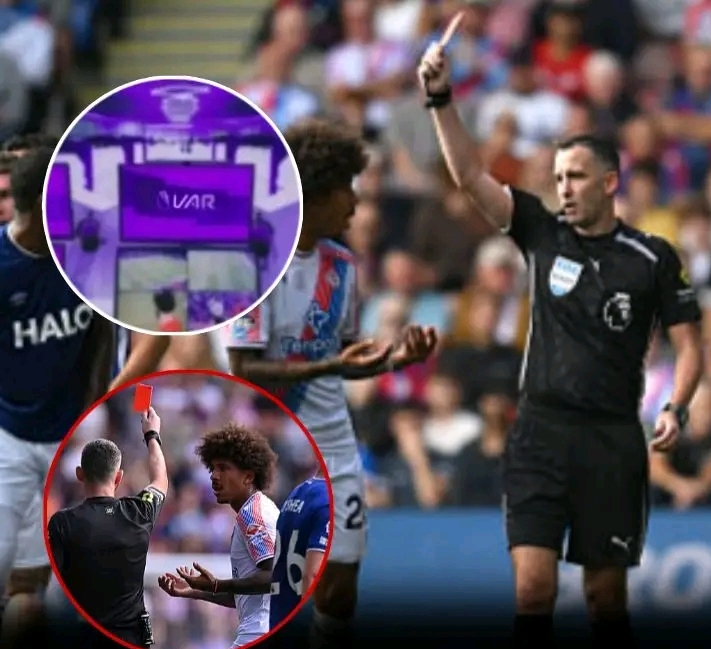
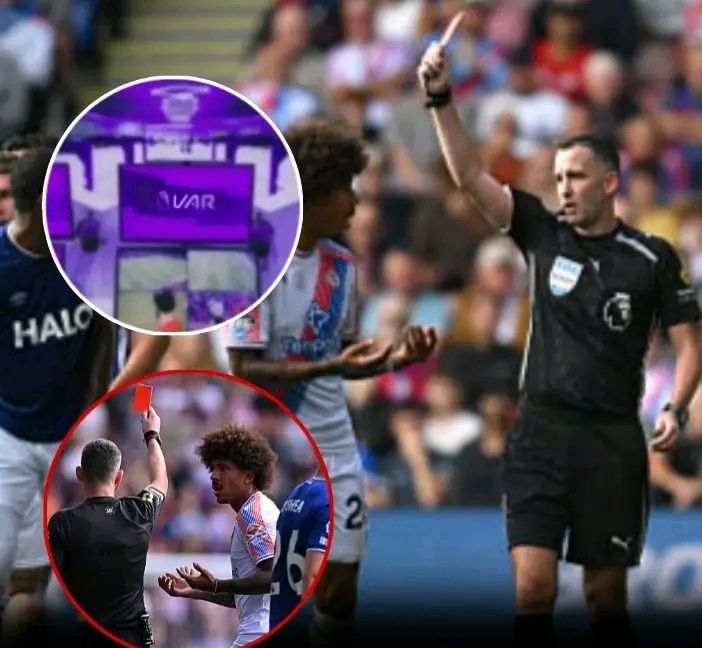
What initially looked like a fiercely contested Premier League match turned into a completely different contest after Disasi was shown a straight red card following a VAR review.
And with Palace eventually losing to a 90th-minute winner from Zian Flemming, supporters have naturally been left wondering just how much the decision influenced the outcome.
The moment that changed everything
The controversy came in the 34th minute, with the score level at 1–1.
Disasi challenged Ipswich’s Jack Clarke in what was immediately recognised as a serious challenge.
The referee initially reviewed the incident before ultimately producing a straight red card.
Suddenly, Palace were down to 10 men.
And they still had almost an hour of football to survive.
The decision immediately divided opinion.
Some felt the challenge was dangerous enough to warrant the strongest possible punishment, particularly because of the position of Disasi’s studs and the force involved.
Others questioned whether a red card was excessive given the nature of the contact.
That disagreement has only intensified since the final whistle.
VAR once again finds itself in the spotlight
The incident has inevitably placed VAR at the centre of another major Premier League debate.
The entire purpose of VAR is to help officials reach the correct decisions in crucial moments.
But whenever a review results in a sending-off, the question becomes whether the technology has genuinely corrected an obvious error or simply encouraged officials to interpret incidents more harshly.
That is exactly what supporters have been debating following the Palace game.
Was the tackle sufficiently dangerous to justify a straight red?
Did VAR intervene appropriately?
And was the threshold for a dismissal applied consistently?
Those questions are unlikely to disappear quickly.
Keith Hackett gives his verdict
Former PGMOL chief Keith Hackett has also entered the discussion.
Rather than criticising the officials, Hackett reportedly defended the decision and believed the red card was justified.
His argument centred on the force of the challenge and the position of Disasi’s studs.
For Hackett, the incident crossed the line between a normal competitive challenge and one deserving of a dismissal.
That provides important context because the decision was not universally viewed as a mistake.
There are clearly people within the refereeing community who believe the officials got the major call right.
But Palace supporters are likely to see things very differently.
Palace had to fight with 10 men
Whatever your view of the red card, there is no denying that it fundamentally changed the match.
Palace were forced to reorganise for almost an hour.
Instead of being able to attack with 11 players, they had to balance their desire to find a winner with the need to avoid leaving themselves exposed.
Ipswich, meanwhile, suddenly had a numerical advantage.
That gave Gary O’Neil’s side the opportunity to dominate possession and increase the pressure.
Yet Palace refused to collapse.
Incredibly, they continued to fight.
Palace produce an incredible comeback
Despite being reduced to 10 men, Palace showed enormous character.
Ipswich managed to take advantage of the extra man, but Palace refused to surrender.
They eventually found another goal through Jørgen Strand Larsen, bringing the score level at 2–2.
At that point, the home supporters were dreaming of something remarkable.
A team playing with 10 men had fought back twice and appeared to have rescued a point.
Given the circumstances, a draw would have felt like a victory for Palace.
But there was still one final twist.
Flemming breaks Palace hearts
Just when it appeared Palace had completed their comeback, Ipswich delivered the decisive blow.
Zian Flemming scored in the 90th minute to make it 3–2.
The Selhurst Park crowd was stunned.
Palace had battled through adversity.
They had survived with 10 men.
They had scored twice after the sending-off.
And yet they were still walking away with nothing.
The late winner made the earlier red-card controversy even more significant.
Could Palace have won with 11?
That is the question supporters will inevitably ask.
Nobody can know what would have happened if Disasi had remained on the pitch.
Football does not work that way.
But there is no question that playing with 10 men for almost an hour changed the tactical dynamics of the game.
Palace had fewer attacking options.
Their defensive workload increased.
Ipswich had more space and numerical superiority.
And ultimately, the visitors were able to find the winning goal late on.
That does not automatically mean the red card was wrong.
But it explains why Palace supporters are likely to scrutinise the decision so closely.
The bigger VAR debate
The Disasi incident has also reignited the wider discussion about VAR and red-card consistency.
Supporters want clear and consistent standards.
If one challenge results in a straight red while another seemingly similar incident produces only a yellow, questions will inevitably follow.
That is the difficult position PGMOL continues to find itself in.
Officials are expected to make difficult decisions in real time, while VAR officials are expected to intervene when the threshold for a clear and obvious error is met.
But every controversial review creates another debate about where exactly that threshold should sit.
Palace’s defeat makes it even more painful
Had Palace managed to hold on for a 2–2 draw, the conversation surrounding the red card would still have been significant.
But losing in the final minute makes everything feel worse.
The Eagles fought desperately to overcome the disadvantage.
They found a way back into the match.
They appeared to have earned a point.
Then Flemming’s late strike took everything away.
That is why the red card will remain such a major talking point.
Ipswich deserve credit
It would also be unfair to focus entirely on the officials.
Ipswich deserve enormous credit for the way they responded to the situation.
Gary O’Neil’s players recognised that they had a numerical advantage and continued pushing until the final whistle.
They refused to become frustrated when Palace repeatedly fought their way back into the game.
And when the opportunity finally arrived, Flemming took it.
The 90th-minute winner completed a remarkable away victory and gave Ipswich three huge points.
Palace left wondering what might have been
For Crystal Palace, however, the feeling will be very different.
They will probably look back at the match and wonder whether they could have secured all three points had they remained at full strength.
The red card undoubtedly changed the contest.
Whether it was the correct decision is now the subject of intense debate.
And with former refereeing figures defending the call, there is unlikely to be a simple answer that satisfies everyone.
PGMOL once again under the microscope
The controversy is another reminder of the enormous pressure placed on Premier League officials.
Every major decision is now analysed from multiple camera angles, slowed down and debated by millions of supporters.
VAR was introduced to eliminate major mistakes.
Yet controversial decisions involving VAR continue to dominate football conversations.
The Palace–Ipswich clash is simply the latest example.
For Palace supporters, the biggest frustration will be that their team showed tremendous character after the dismissal but ultimately received nothing for their efforts.
For Ipswich, it was a dramatic victory sealed at the perfect moment.
And for PGMOL, another controversial decision has placed Premier League officiating firmly back under the microscope.
The debate over Disasi’s red card is unlikely to end anytime soon.


 admin