 admin
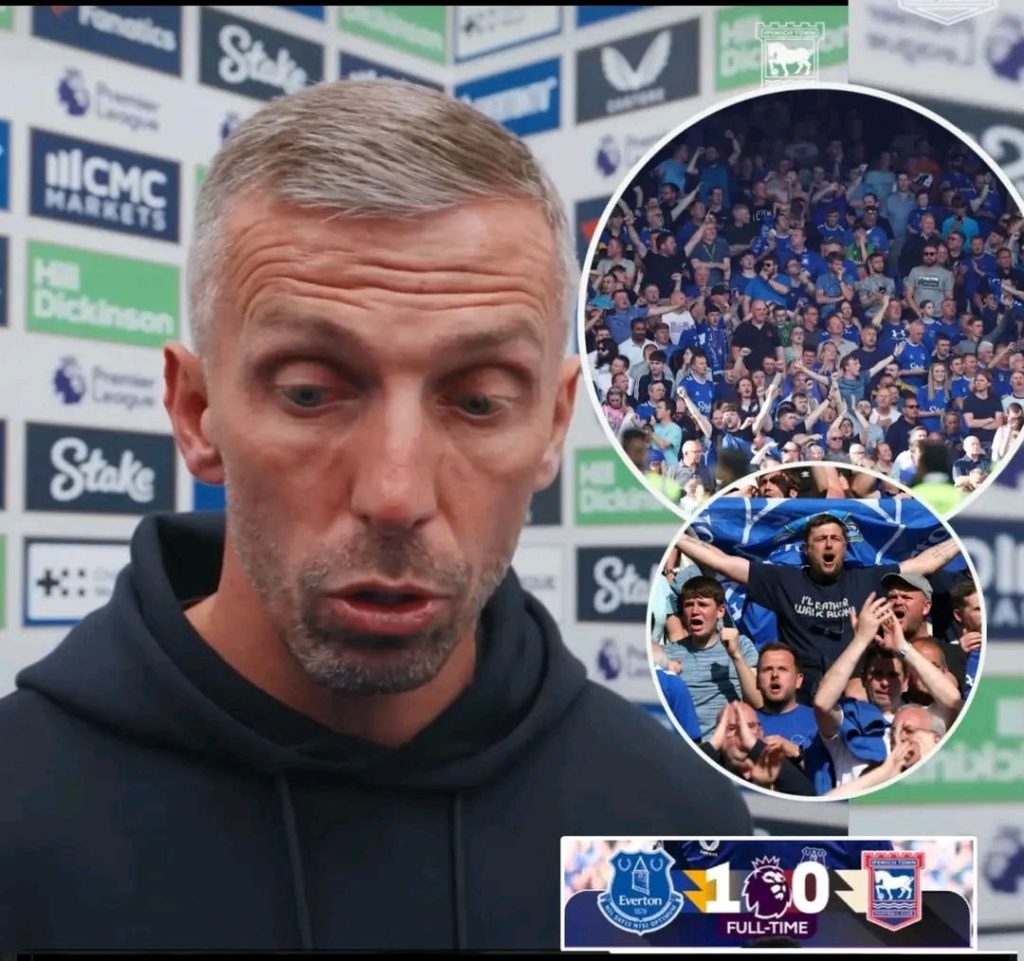
“This Is Why Teams Hate Everton” — Hill Dickinson Noise Becomes Major Talking Point After Ipswich Defeat
Everton secured a hard-fought 1-0 victory over Ipswich Town at Hill Dickinson Stadium, but the result was followed by a wave of discussion about the atmosphere inside the stadium and the impact of Everton’s supporters on the visiting side.
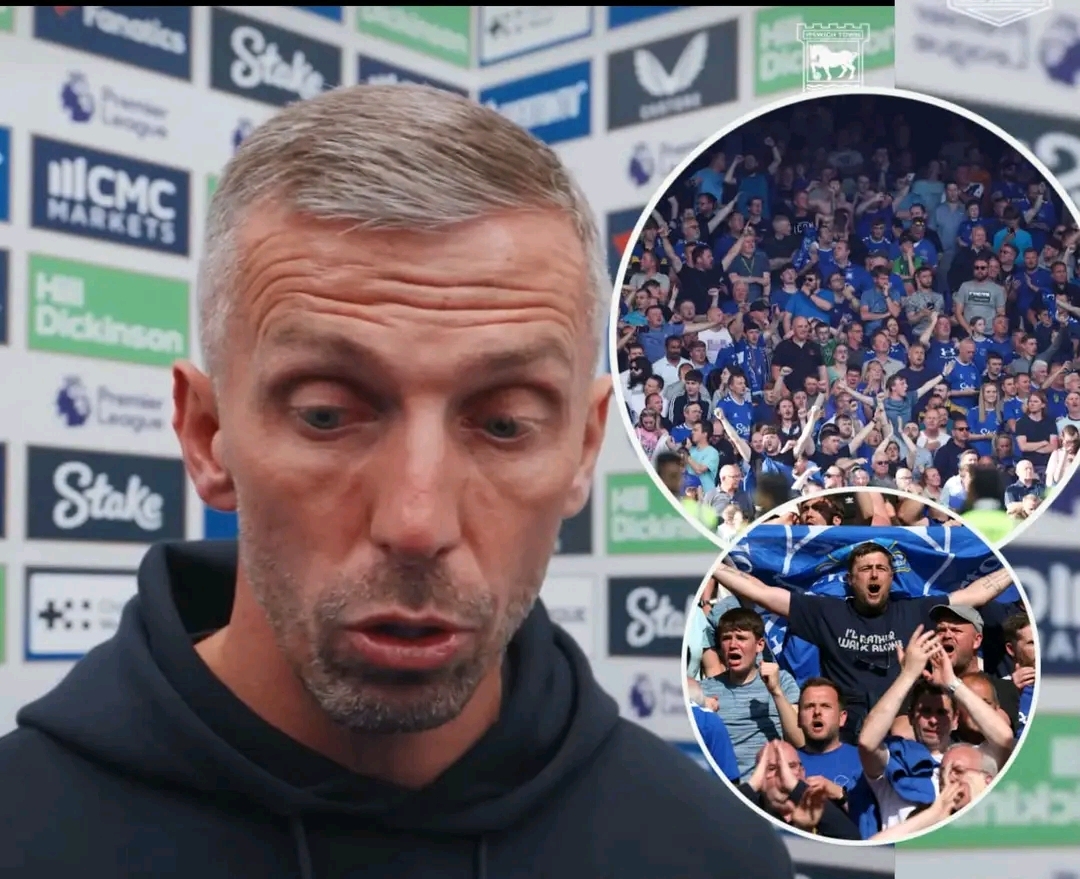
For Ipswich manager Gary O’Neil, it was another frustrating afternoon.
His team competed strongly, created opportunities and even finished the match with an extra level of determination after being reduced to ten men.
But ultimately, one early goal was enough to give Everton all three points.
And as supporters reacted online after the final whistle, attention quickly turned towards the noise generated by the Everton fans.
One phrase began circulating particularly widely:
“This is why teams hate Everton. The noise doesn’t just support… it destroys.”
The quote has been used across social media as part of the reaction to the match, with some supporters portraying it as a reflection of the intimidating atmosphere created inside Hill Dickinson Stadium.
However, there is no verified evidence that O’Neil himself made that exact statement.
His actual post-match comments were considerably more measured.
The Ipswich boss said he was disappointed with the result but felt his team had been unfortunate to leave Merseyside empty-handed. He also praised the way his players responded after being reduced to ten men.
Still, the atmosphere became part of the wider conversation.
And for anyone watching the game, it was easy to understand why.
Everton supporters were determined to create a difficult environment for Ipswich.
The home crowd responded to tackles, attacking moves and moments of pressure, while the noise increased whenever Everton pushed forward.
The intensity of the stadium was particularly noticeable during the closing stages.
Ipswich were already dealing with the numerical disadvantage created by Abdul Fatawu’s dismissal.
Fatawu was shown a second yellow card in the 67th minute after being judged to have simulated contact, leaving O’Neil’s side with ten players for the final 23 minutes.
That completely changed the atmosphere.
Everton supporters sensed that their team had an opportunity to close out the match.
The volume increased.
Ipswich had to defend deeper.
Every clearance was celebrated.
Every Everton attack brought another wave of encouragement from the stands.
For the visiting players, maintaining concentration under those circumstances was always going to be difficult.
But Ipswich deserve credit for the way they responded.
O’Neil specifically praised his players for their performance with ten men, describing their response as “incredible” in his post-match assessment.
That detail is important because the online narrative has largely focused on the noise.
The actual football story was much more complicated.
Everton had taken the lead as early as the 11th minute.
James Tarkowski’s effort from distance took a decisive deflection off Thierno Barry, wrong-footing Ipswich goalkeeper Christian Walton and putting David Moyes’ side in front.
It was an unusual goal, but it was enough to give Everton control of the scoreboard.
Ipswich were not overwhelmed.
In fact, O’Neil believed his side had controlled significant portions of the contest.
He said his team were competitive away from home and had arrived in dangerous areas but failed to provide the final pass or finish required to turn their possession and opportunities into goals.
That became the defining problem for Ipswich.
They were able to get forward.
They were able to create promising situations.
But when the decisive moment arrived, the final execution was missing.
Everton, meanwhile, were not especially clinical themselves.
The Toffees recorded 21 shots but managed only two on target, according to Sky Sports.
That statistic tells its own story.
This was not a match in which Everton simply dominated Ipswich from beginning to end.
Instead, David Moyes’ team found an early goal and then battled through a difficult contest.
There was even controversy surrounding a second Everton goal.
Barry appeared to score again with a header, but VAR intervened and the goal was ruled out because Brennan Johnson was judged to have interfered with play from an offside position.
The decision generated debate, with some analysts questioning whether Johnson actually affected the goalkeeper’s ability to make a save.
But Everton did not need another goal.
Their first was enough.
And when Fatawu was sent off, the challenge for Ipswich became even greater.
O’Neil was diplomatic about the decision.
He acknowledged that he had seen similar incidents given and not given, while accepting that his player had moved his leg towards the contact and needed to be more careful after already receiving a yellow card.
The Ipswich manager’s comments showed that he was not simply looking for excuses.
His main frustration was the result.
He believed his players had done enough to deserve something from the match.
And that is where the discussion about the Everton atmosphere becomes interesting.
Some supporters online have suggested that the constant noise from the home crowd contributed to Ipswich losing concentration.
Others have argued that such claims exaggerate the influence of supporters and take attention away from the football itself.
There is no way to conclusively measure whether crowd noise directly caused a particular mistake.
But there is no question that footballers are affected by their surroundings.
Communication becomes harder.
Pressure increases.
Momentum can change.
And when a home crowd believes its team is about to close out a victory, the emotional intensity can become enormous.
Hill Dickinson certainly provided that environment on Saturday.
Everton supporters remained engaged throughout the match, particularly after Fatawu’s dismissal.
Ipswich were attempting to survive with ten men.
Everton were pushing for a second goal.
The home supporters wanted to see their team finish the job.
The noise reflected that tension.
For O’Neil, however, his players deserve credit rather than criticism.
He said the response after the red card was excellent and highlighted the positives despite the defeat.
That makes the online claim that Everton’s supporters “destroyed” Ipswich a little more complicated.
If anything, Ipswich demonstrated resilience under enormous pressure.
They remained in the game.
They continued attempting to create opportunities.
And they almost found a way back despite having one fewer player.
Everton ultimately held on.
The result extended their unbeaten start to the season and moved David Moyes’ side into the top five.
For the Toffees, it was another demonstration of their defensive resilience.
For Ipswich, it was a frustrating afternoon in which the performance offered more encouragement than the final score suggested.
The supporters, meanwhile, had another reason to celebrate.
The atmosphere after the final whistle reflected the importance of the victory.
Everton had managed to overcome Ipswich, survive their own missed opportunities and deal with a determined ten-man opponent.
The home crowd had played its part by creating an intense environment.
And that is exactly why the online reaction became so strong.
Fans began describing Hill Dickinson as a place where visiting teams could struggle to remain comfortable.
The phrase “this is why teams hate Everton” quickly became a popular way of describing that perception.
But it should be understood as fan reaction rather than a confirmed quote from O’Neil.
The Ipswich manager’s actual message was focused on football.
He felt his team were unfortunate.
He felt they had competed well.
He believed they had shown enough to take something from the match.
And he identified their biggest weakness as a lack of cutting edge in the final third.
That assessment also explains why the defeat will be frustrating for Ipswich.
They were not simply blown away.
They did not collapse after conceding.
They fought.
Even after losing Fatawu, they remained competitive.
But Premier League matches can be decided by tiny moments.
Everton took advantage of one.
Ipswich did not take advantage of theirs.
That was the difference.
And with the international break now providing some breathing room, O’Neil will have time to work with his squad before their next challenge.
The manager will want his players to improve their final decision-making and finishing.
He will also want Fatawu to learn from his dismissal.
But there is another lesson from the afternoon.
Playing away in the Premier League is not simply about dealing with eleven opponents.
It is also about dealing with the environment.
The supporters.
The noise.
The pressure.
The momentum.
And the emotional intensity that can build inside a stadium.
Everton supporters created plenty of all four.
Whether that actually caused Ipswich players to lose focus is impossible to prove.
What can be said is that Everton made Hill Dickinson a difficult place for the visitors, while Ipswich showed considerable resilience despite the circumstances.
The final score will ultimately read Everton 1, Ipswich Town 0.
Thierno Barry’s early deflected effort will go down as the decisive moment.
Fatawu’s second yellow card will remain another major talking point.
VAR’s intervention will continue to generate debate.
But the atmosphere will also be remembered.
The Everton fans were loud.
They were relentless.
And when their team needed them most, they made sure the stadium knew it.
For Everton, that noise accompanied another three points.
For Ipswich, it became part of another painful away-day lesson.
And for social media, it provided the perfect ingredients for another viral football debate.
“This is why teams hate Everton.”
It may not have been Gary O’Neil’s actual quote.
But after a tense 1-0 victory at Hill Dickinson, it certainly captured the mood surrounding the Everton supporters.


 admin