 admin
Derek McInnes touchline clash sparks calls for a one-match ban as footage fuels debate over what was said to Martin O’Neill
Derek McInnes found himself at the centre of one of the most heated moments of Celtic’s 1-0 defeat to Rangers at Celtic Park, after an early touchline confrontation involving the Rangers manager, Celtic first-team coach Mark Fotheringham and Martin O’Neill.
The incident happened just minutes into Sunday’s Old Firm derby, before Ryan Naderi eventually settled the match with the only goal of the game. While the result itself has dominated the post-match discussion, the extraordinary scenes on the touchline have also attracted significant attention.
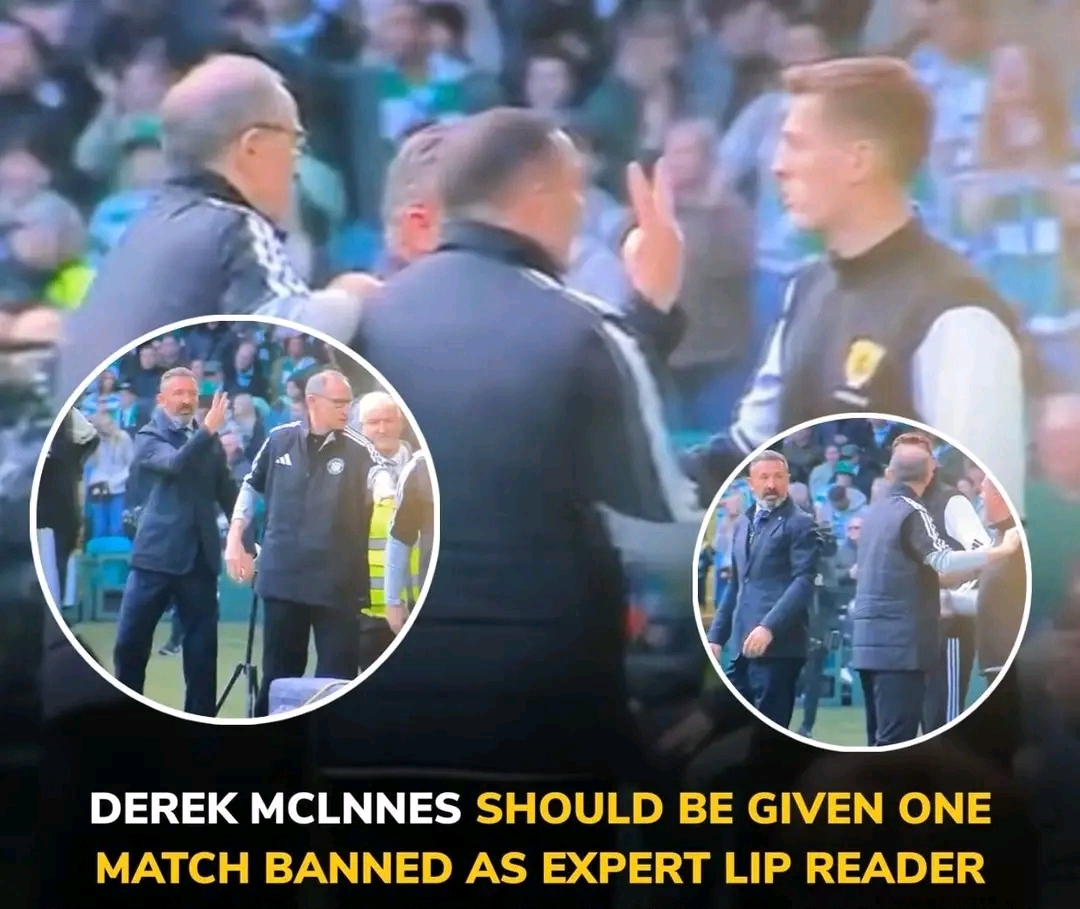
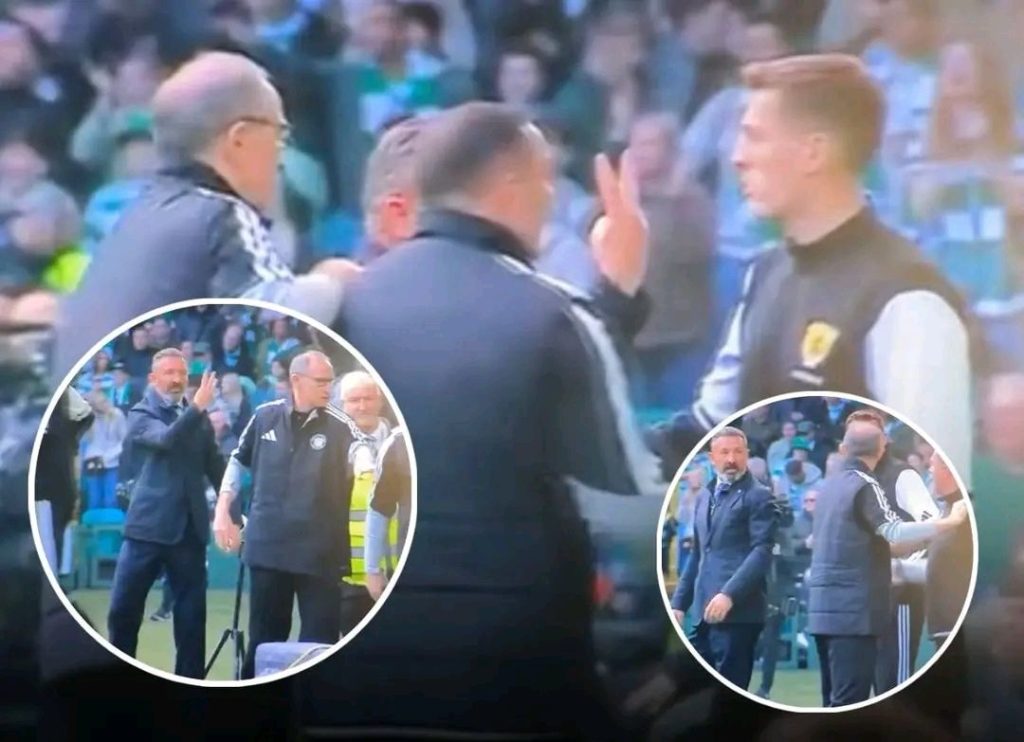
Images from the incident show McInnes visibly animated, raising several fingers while appearing to argue with members of the Celtic technical area. O’Neill was also involved in attempting to separate those involved as tempers threatened to boil over.
There has since been considerable discussion online about what McInnes actually said during the exchange, with some claims suggesting that an expert lip reader has interpreted his words. However, the exact words cannot be established from the publicly available footage with enough certainty to present a lip-reading interpretation as a confirmed quote.
What is clear is that the incident was serious enough for referee John Beaton to intervene and issue yellow cards to both McInnes and Fotheringham.
And that has left a wider question hanging over the Rangers boss: could the Scottish FA decide that the incident deserves further disciplinary action?
The confrontation began almost immediately
The flashpoint came only a few minutes into the match.
Rangers defender Emmanuel Fernandez was booked after pulling back Celtic forward Camilo Duran as the home side attempted to break forward. McInnes immediately appeared unhappy with the decision and began remonstrating from the Rangers technical area.
According to reports following the game, McInnes initially directed his frustration towards the fourth official before the situation escalated when members of the Celtic dugout became involved.
The television cameras then captured McInnes and Fotheringham involved in a heated exchange.
O’Neill appeared to step across as the situation developed, with footage showing him attempting to usher people away from the confrontation.
The images supplied from the incident provide another angle of the extraordinary moment. McInnes can clearly be seen gesturing with his hand while speaking towards the Celtic side.
At one stage, he appears to raise multiple fingers, a gesture that reports have interpreted as him questioning the decision to book Fernandez so early in the game.
But while the body language is clear, the exact words are not.
That distinction is important.
What did McInnes actually say?
This is where the story has become considerably more complicated.
Social-media posts have circulated claiming that lip-reading experts have established exactly what McInnes said during the confrontation. Some versions of the story have presented particular phrases as though they were confirmed.
There is currently no sufficiently reliable public evidence to establish those precise words as fact.
That does not mean nothing was said.
Quite the opposite.
The footage clearly shows an animated verbal exchange, and contemporary reports confirm that McInnes and Fotheringham exchanged words before officials intervened.
But professional lip reading is inherently difficult, particularly when footage is distant, faces are partially obscured and multiple people are speaking simultaneously.
For that reason, any alleged transcription should be treated as an interpretation rather than a definitive record unless the person involved confirms it or clearer footage/audio becomes available.
That hasn’t stopped the incident from becoming a major talking point among supporters.
McInnes later explained his reaction
After Rangers secured the 1-0 victory, McInnes was asked about the yellow card he received during the confrontation.
His explanation was notably different from the increasingly dramatic interpretation of the incident online.
McInnes said: “It was 3-1 against me – and there was only two bookings.”
He then added that he was “probably just sticking up for my team.”
That explanation gives important context.
From McInnes’ perspective, his reaction was primarily about defending his player and challenging what he believed was an unfair decision.
However, the fact that a manager believes he is defending his team does not automatically remove the possibility of disciplinary consequences if his behaviour crosses the line.
The Scottish FA’s laws specifically allow team officials to be cautioned or sent off for misconduct.
Why supporters are talking about a ban
The calls for a one-match ban are largely connected to the intensity of the confrontation rather than the yellow card itself.
McInnes was already booked during the incident, meaning the referee dealt with the situation during the match.
But disciplinary authorities can consider incidents beyond the immediate on-field punishment where there is evidence of misconduct.
Scottish football’s disciplinary framework has historically treated misconduct by team officials seriously, including aggressive behaviour, offensive or abusive language and inappropriate conduct in the technical area.
The SPFL rules also provide for match officials to report cases of misconduct and unacceptable conduct involving club officials.
That means the referee’s report could be important.
If Beaton considered the incident sufficiently serious, his report could provide the basis for any subsequent disciplinary review.
At this stage, however, there is no confirmed announcement that McInnes has been given a one-match suspension.
So the suggestion of a ban remains a disciplinary question rather than an established outcome.
The timing makes the incident even more significant
What makes the confrontation particularly interesting is the wider context surrounding the match.
Rangers had already defeated Celtic 3-0 in the League Cup the previous week.
The Premiership meeting at Celtic Park therefore represented an opportunity for O’Neill’s side to respond.
Instead, Rangers won again.
Ryan Naderi scored the decisive goal in the 33rd minute, giving McInnes his second Old Firm victory in eight days. Rangers moved to within two points of Celtic at the top of the Scottish Premiership.
It was also a remarkable achievement historically.
McInnes became the first Rangers manager since Graeme Souness to win his first two Old Firm matches.
That puts the touchline controversy into a much bigger story.
McInnes did not merely survive the pressure of another Old Firm encounter.
His Rangers side left Celtic Park with another victory.
O’Neill’s involvement adds another layer
For Celtic supporters, the presence of Martin O’Neill in the incident makes the footage particularly interesting.
O’Neill is not simply any Celtic manager. His history with the club means that his return has been followed closely, particularly after his success during his previous spell in charge.
Yet Sunday’s defeat left him facing questions about his future after Celtic suffered three consecutive losses.
Those defeats included the previous 3-0 League Cup defeat against Rangers and a 3-1 Europa League loss to Ferencvaros.
O’Neill subsequently admitted that he would reflect on his position during the international break.
That makes the touchline scenes even more symbolic for some supporters: Celtic were struggling on the pitch while tensions were simultaneously rising around the technical area.
The bigger question for McInnes
For McInnes, the immediate priority will undoubtedly be the result.
Rangers have now beaten Celtic twice in the space of eight days, and the manager has established an impressive early record in the fixture.
But managers are judged not only by results but also by their behaviour on the touchline.
The Scottish FA has recently placed emphasis on improving behaviour around technical areas and creating a more respectful environment for players, coaches and match officials. Its wider “Let Them Ref” initiative specifically addresses behaviour towards officials and the need to reduce abusive or confrontational conduct.
That context means incidents such as Sunday’s confrontation will naturally receive attention.
Whether the footage ultimately leads to further action will depend on the referee’s report and any subsequent disciplinary assessment.
Celtic fans will continue to debate the footage
For Celtic supporters, the controversy has become another talking point from an extremely difficult week.
There is frustration over the team’s performances, concern over O’Neill’s future and now discussion about what happened on the touchline.
For Rangers supporters, the interpretation is understandably different.
McInnes’ explanation was that he was protecting his player and challenging a decision he believed was unfair.
That difference in perspective is exactly why the footage has generated so much debate.
The images unquestionably show a heated confrontation.
They do not, however, provide enough evidence to establish every word spoken.
That distinction should remain at the heart of the discussion.
What happens next?
The key development will be whether the Scottish FA takes any further action after reviewing the referee’s report and available footage.
McInnes has already received his yellow card, while Fotheringham was also cautioned during the confrontation.
If the authorities decide the incident requires additional disciplinary consideration, further details should emerge through the normal process.
For now, the strongest confirmed facts are straightforward: McInnes became involved in a heated exchange with the Celtic dugout, O’Neill was present as the confrontation developed, both McInnes and Fotheringham were booked, and Rangers subsequently won 1-0.
The alleged lip-reading details circulating online should be treated cautiously unless independently verified.
What cannot be disputed is that the touchline became almost as dramatic as the football itself — and with Rangers now only two points behind Celtic, the latest Old Firm victory has given McInnes plenty of reason to celebrate, even as his touchline conduct continues to attract scrutiny.


 admin


