 admin
admin
FIFA Releases Statement Confirming Decision After ‘Kick Argentina Out’ Petition Reportedly Reaches 23 Million Signatures
FIFA has reaffirmed that online petitions and social media campaigns have no influence over its disciplinary or competition decisions after a viral campaign calling for Argentina to be removed from international football reportedly amassed 23 million signatures.
The petition became one of the biggest talking points during the closing stages of the 2026 FIFA World Cup, generating widespread debate across social media and football communities worldwide. Although the campaign attracted millions of signatures and dominated online discussions, it carried no legal or regulatory authority over FIFA’s governance or tournament outcomes.
In a statement reaffirming its position, FIFA emphasized that all disciplinary matters are handled under its established regulations and judicial procedures rather than public opinion or online campaigns. The governing body made it clear that competition results and sanctions are determined through official processes, with decisions based on evidence and the FIFA Disciplinary Code—not internet petitions.
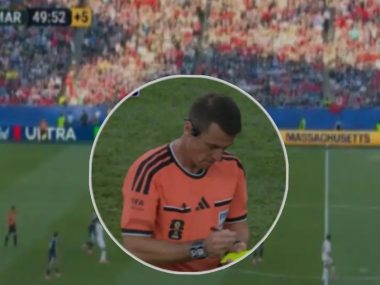
The petition gained momentum after a series of controversial moments involving Argentina during the tournament. Supporters of the campaign argued that several refereeing decisions appeared to favour the South American side, prompting accusations of inconsistency in officiating. Critics of the movement, however, dismissed the claims as emotional reactions from disappointed supporters, arguing that controversial decisions are an inevitable part of football and should not overshadow performances on the pitch.
As debate intensified, the campaign spread rapidly across multiple countries. Football supporters shared links through social media platforms, messaging apps and online fan communities, encouraging people from around the world to add their names regardless of nationality.
Within a matter of days, the reported number of signatures climbed into the millions, making the petition one of the most widely discussed football-related online campaigns of the tournament.
The viral movement also highlighted the growing influence of social media in shaping football conversations. Every refereeing decision, controversial incident and VAR review was analysed in real time, with supporters posting slow-motion clips, tactical breakdowns and statistical comparisons to support their arguments.
Hashtags linked to the petition trended in numerous countries, while football influencers, former professionals and content creators offered sharply contrasting opinions. Some argued that the campaign reflected genuine concerns about refereeing standards at the highest level of the game, while others criticised it as an unfair attempt to discredit one of world football’s most successful national teams.
Several football analysts urged supporters to separate isolated refereeing incidents from overall tournament performances, pointing out that teams progress through multiple rounds and must consistently deliver high-quality performances to compete for major honours.
The campaign also sparked fierce debate among fans. Those backing the petition claimed that football authorities should continue improving transparency around officiating decisions and VAR communication. Others insisted that while refereeing errors should always be reviewed, demanding the removal of a national team from competition based on disputed decisions was unrealistic and inconsistent with FIFA regulations.
Despite the online attention, legal experts and football administrators noted that such petitions have no formal role within FIFA’s governance structure. The organisation’s disciplinary bodies investigate alleged breaches of regulations independently, with sanctions imposed only when supported by evidence and the applicable rules.
The discussion nevertheless demonstrated the extraordinary reach of modern football fandom. What began as a fan-led online initiative evolved into a worldwide conversation involving millions of supporters, highlighting how digital platforms now shape narratives almost as quickly as events unfold on the pitch.
While emotions remained high following the tournament, FIFA’s position leaves little room for uncertainty. Online campaigns, regardless of how many signatures they attract, cannot overturn match results, remove teams from competitions or alter official tournament outcomes.
As football supporters continue debating controversial moments from the World Cup, FIFA has reiterated that sporting integrity will continue to be protected through its established judicial framework rather than public petitions, ensuring that disciplinary decisions remain governed by regulations rather than the popularity of online movements.


 admin
admin