 admin
admin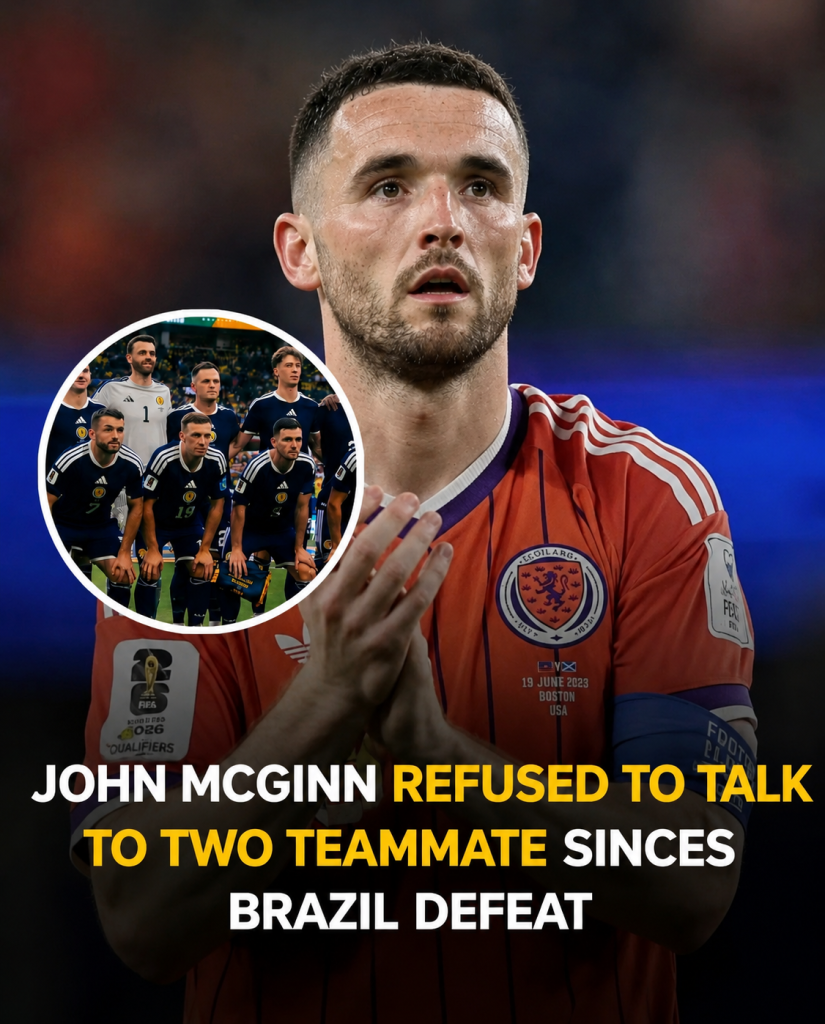
John McGinn Refused to Speak to Two Teammates Since Brazil Defeat
When Scotland’s World Cup dream came crashing down following a heartbreaking defeat to Brazil, the result was painful enough. Supporters were devastated, players were left in tears, and questions immediately emerged about what had gone wrong.
the biggest fallout did not happen under the bright lights of the stadium. Instead, it unfolded quietly behind closed doors, where Scotland captain John McGinn reportedly stopped speaking to two of his teammates altogether.
For days after the elimination, the dressing room was said to have become divided. Conversations became shorter. Team meals became quieter. Players who had laughed together throughout the tournament suddenly found themselves sitting at opposite ends of the room.
And at the centre of the storm stood John McGinn.
The Liverpool defender, known throughout his career for his leadership, passion, and relentless desire to win, allegedly believed that Scotland had thrown away their greatest opportunity in decades.
This account imagining how such events might unfold inside a national team under immense pressure.
The Night Everything Changed
Brazil entered the match as favourites.
Scotland had fought brilliantly throughout the tournament to reach the knockout stages, producing disciplined performances built on teamwork rather than individual brilliance.
The match began almost perfectly.
Scotland defended with courage.
Every tackle was cheered.
Every clearance felt like a goal.
John McGinn constantly urged his teammates forward, refusing to allow anyone to lose concentration.
For nearly an hour, Scotland frustrated one of the world’s greatest footballing nations.
Then everything changed.
A misplaced pass in midfield allowed Brazil to launch a devastating counterattack.
Seconds later, the ball was in Scotland’s net.
The goal completely altered the momentum.
As Scotland searched desperately for an equaliser, another defensive mistake allowed Brazil to score again.
The final whistle eventually confirmed Scotland’s elimination.
Several players collapsed onto the pitch.
Robertson and John McGinn remained standing.
Hands on hips.
Eyes fixed on the ground.
They did not applaud the travelling supporters immediately.
They simply stared into space.
Something inside them had broken.
Silence Inside the Dressing Room
Normally, after difficult defeats, Robertson was one of the first players to lift spirits.
He encouraged teammates.
He reminded younger players that football always offers another opportunity.
This time was different.
Him and McGinn entered the dressing room without saying a word.
He removed his captain’s armband.
Placed it carefully beside his shirt.
Sat alone.
Nobody approached him.
Manager Steve Clarke attempted to speak to the squad.
Only a few players listened.
Everyone else remained lost in disappointment.
After the team talk ended, Robertson reportedly walked straight past two teammates who tried to comfort him.
He ignored them completely.
At first, everyone assumed emotions were simply running high.
No one realised this silence would continue for days.
Training Ground Tension
When Scotland resumed training before returning home, something unusual caught everyone’s attention.
McGinn participated professionally.
He worked hard.
He encouraged younger players during drills.
Yet whenever two particular teammates came close, he simply walked away.
No greetings.
No conversations.
No eye contact.
The coaching staff noticed immediately.
Football squads survive on communication.
Silence can sometimes be more damaging than open arguments.
Players quietly began asking one another:
“What’s happened?”
Nobody knew.
Rumours Begin to Spread
Inside every football camp, rumours travel faster than official information.
Some believed Robertson blamed two teammates for Brazil’s goals.
Others thought tactical disagreements had exploded after the match.
Another theory suggested heated words had been exchanged inside the dressing room immediately after full time.
None of those rumours were confirmed.
But uncertainty created even greater tension.
Players started choosing sides without even understanding what had actually happened.
Small disagreements became larger.
Normal conversations disappeared.
The relaxed atmosphere Scotland had enjoyed throughout the tournament suddenly vanished.
The Captain’s Frustration
In this fictional version of events, John McGinn wasn’t angry simply because Scotland had lost.
He was angry because he believed the defeat had been avoidable.
He reportedly replayed both Brazilian goals repeatedly.
Every mistake.
Every missed tackle.
Every poor decision.
To him, they represented opportunities wasted.
A World Cup only comes around every four years.
For experienced players approaching the latter stages of their international careers, every tournament feels precious.
Robertson allegedly felt Scotland had allowed history to slip away.
His disappointment slowly transformed into frustration.
That frustration eventually became silence.
Senior Players Attempt to Intervene
Several experienced members of the squad recognised the danger.
A divided dressing room can destroy future qualification campaigns.
One senior player reportedly organised a private meeting.
Only experienced internationals attended.
Everyone was encouraged to speak honestly.
Some apologised for individual mistakes.
Others admitted they had struggled mentally during the Brazil game…
Finally, attention turned towards Robertson.
He listened quietly.
But still refused to address the two teammates directly.
The meeting ended without resolution.
Steve Clarke Faces His Toughest Challenge
Managers often solve tactical problems.
Handling emotional ones can be even harder.
According to this fictional scenario, Steve Clarke understood immediately that rebuilding unity had become just as important as improving performances.
Rather than forcing conversations, Clarke reportedly chose patience.
He scheduled smaller group sessions.
Mixed seating arrangements during meals.
Extra team-building activities.
His objective was simple.
Remind everyone they represented Scotland before they represented themselves.
Yet McGinn remained distant.
Fans Notice Something Strange
Supporters rarely have access to dressing rooms.
But they notice body language.
Photos from training quickly circulated online.
Fans pointed out that Robertson appeared unusually isolated.
Some images showed him walking alone.
Others appeared to show teammates avoiding one another.
Social media exploded with speculation.
Had Scotland’s captain fallen out with senior players?
Was the squad divided?
Were retirements coming?
Every photograph fuelled another theory.
Media Pressure Intensifies
Journalists naturally sensed something unusual.
Every press conference included similar questions.
“Is everything okay inside the squad?”
“Have relationships broken down?”
“Has the captain spoken to everyone?”
Players consistently dismissed suggestions of conflict.
But vague answers only increased curiosity.
The more Scotland denied problems, the louder the rumours became.
The Two Teammates Finally Respond
Unable to ignore speculation forever, the two unnamed teammates reportedly addressed reporters together.
One said:
“Football is emotional.”
The other added:
“We all wanted the same thing.”
Neither criticised Robertson.
Neither defended themselves.
Instead, both accepted responsibility for collective failure.
It was a mature response.
Yet it changed nothing.
Robertson still remained silent.
Liverpool Teammates Reach Out
Back at club level, Robertson’s Liverpool teammates allegedly checked on him.
They understood international disappointment.
Several had experienced painful exits with their own countries.
One message reportedly stood out.
It simply read:
“Don’t carry the whole country on your shoulders.”
John McGinn appreciated the support.
But according to this tale, he still struggled to move beyond the defeat.
Scotland’s Young Players Feel the Impact
The youngest members of the squad watched events unfold carefully.
Many had grown up idolising Robertson.
Seeing their captain emotionally withdrawn affected them deeply.
Some became nervous about approaching him.
Others worried they had somehow contributed to the atmosphere.
Confidence began fading throughout the camp.
A Private Conversation
Eventually, Steve Clarke reportedly arranged a private meeting.
Just himself.
Robertson.
And the two teammates.
No coaches.
No staff.
No distractions.
The discussion reportedly lasted over two hours.
Voices were raised.
Emotions surfaced.
Mistakes were acknowledged.
Frustrations were explained.
For the first time since the Brazil defeat, everyone spoke openly.
The Turning Point
Nobody emerged smiling.
Healing rarely happens instantly.
But when the meeting ended, something had changed.
Robertson reportedly nodded towards both teammates before leaving the room.
The following morning, he greeted them for the first time in over a week.
It wasn’t dramatic.
No emotional embrace.
No public apology.
Just a simple handshake.
Sometimes that is enough.
Rebuilding Trust
The following training session looked completely different.
Communication returned.
Laughter slowly reappeared.
Players encouraged each other.
Mistakes were met with encouragement rather than frustration.
Scotland still carried disappointment.
But the dressing room finally felt united again.
Robertson Breaks His Silence
Before Scotland flew home, Robertson finally addressed reporters.
he admitted the defeat had affected him more deeply than any previous international setback.
“I care because this team matters,” he said.
“When emotions are high, everyone reacts differently.
“What matters is how you respond afterwards.”
Without naming anyone, he acknowledged conversations had taken place.
He insisted Scotland’s future remained bright.
Lessons Learned
Football history is full of dressing-room disagreements.
Winning teams often experience conflict.
The difference lies in whether those conflicts destroy relationships or strengthen them.
For Scotland, this imagined episode became an important lesson.
Players realised honesty matters.
Communication matters.
Leadership sometimes means admitting vulnerability.
Robertson discovered that carrying disappointment alone only makes the burden heavier.
His teammates learned that accountability and forgiveness must exist together if a squad hopes to compete with the world’s elite.
Looking Ahead
As Scotland turned its attention to future qualification campaigns, supporters hoped the painful World Cup exit would ultimately become a source of motivation rather than division.
The Brazil defeat would never be forgotten.
Neither would the emotional aftermath that followed.
But perhaps, in time, it would become the experience that forged an even stronger Scotland squad.
Because football teams are not defined solely by their greatest victories.
They are often remembered for how they responded to their deepest disappointments.
Andy Robertson’s silence became one of the darkest moments inside Scotland’s dressing room. Yet it also served as the beginning of an important healing process, reminding everyone that leadership is not about never breaking—it is about finding the strength to rebuild once the heartbreak begins to fade.

 admin
admin