 admin

“I’M DECLARING MYSELF A HUGE IPSWICH TOWN ENEMY” — PIERRE SAGE SPEAKS AFTER CRYSTAL PALACE SUFFER DRAMATIC 3-2 DEFEAT
“I’m declaring myself a huge Ipswich Town enemy. They cheated.”
Those were the furious words dominating the aftermath of Crystal Palace’s dramatic 3-2 defeat to Ipswich Town, as Pierre Sage was left facing difficult questions after a match filled with controversy, frustration and a major refereeing decision that completely changed the mood of the contest.
Crystal Palace entered the game believing they had enough quality to come away with a positive result, but what followed was a chaotic afternoon in which goals, defensive mistakes, emotional moments and a controversial red card combined to produce a result that left Palace supporters absolutely furious.
The biggest talking point came when Palace defender Axel Disasi was shown a red card.
For many Palace fans, the decision was simply impossible to understand.
“How is that a red card to Disasi?”
That question was repeated across social media almost immediately after the incident, with supporters arguing that the referee’s decision was far too severe and that Palace were punished at a crucial moment of the match.
The frustration became even greater because the red card appeared to have a huge influence on the game.
Palace had been fighting to remain in control, but being reduced to ten men completely changed the tactical picture. Ipswich immediately sensed an opportunity, increased the pressure and eventually took advantage as the match developed into a thrilling 3-2 victory.
For Sage, the defeat was not simply about the final score.
It was about the circumstances surrounding it.
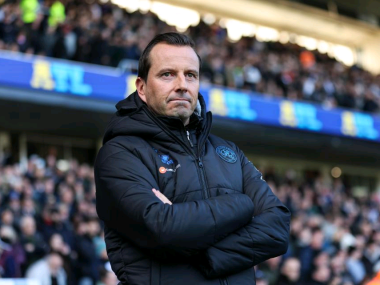
The Crystal Palace manager was visibly disappointed after the final whistle, with his post-match comments reflecting the frustration of a coach who believed his team had been placed in an extremely difficult position.
The referee became one of the biggest subjects of discussion.
Palace supporters were quick to describe the official as Ipswich’s “12th man”, arguing that several decisions appeared to go against their team.
That phrase quickly spread among supporters as emotions boiled over.
“The ref was their 12th man.”
It summed up the feeling among sections of the Palace fanbase.
They believed the match had been influenced by officiating decisions and that the red card to Disasi was particularly damaging.
The controversy overshadowed what had otherwise been an entertaining Premier League contest.
Ipswich deserve credit for the way they responded to the opportunities presented to them. They showed character, stayed in the match and continued pushing even when Palace threatened to regain control.
But Palace fans will argue that the story of the game should not simply be Ipswich’s comeback or their attacking performance.
For them, the Disasi decision is the moment that requires the biggest explanation.
A red card is one of the most serious punishments a referee can give during a football match.
It can completely change the balance between two teams.
That is exactly what Palace supporters believe happened.
Once Disasi was dismissed, Palace had to reorganise. Players who had been given specific attacking and defensive responsibilities suddenly had to work harder to compensate for the missing man.
Sage was forced to make tactical adjustments while Ipswich gained additional confidence.
The match became increasingly difficult for Palace.
Every Ipswich attack carried greater danger. Every defensive mistake became more costly. And every Palace attempt to regain momentum required an enormous amount of physical and mental effort.
Eventually, Ipswich found the goals they needed.
The final scoreline — 3-2 — tells the story of a close match, but it does not tell the entire story of Palace’s frustration.
The defeat has already created a huge debate among supporters.
Some believe Palace should have defended better and managed the game more effectively.
Others insist that the referee’s decisions were the decisive factor.
And then there are those questioning whether Disasi’s challenge genuinely deserved the ultimate punishment.
Sage now faces the difficult task of keeping his players focused.
Football managers cannot change decisions after the final whistle. They can complain, analyse and demand better performances, but ultimately the result remains.
That is what makes defeats like this so painful.
Palace did not lose 4-0 or 5-1. They lost by a single goal in a match where they remained competitive until the end.
That means there will inevitably be a feeling that the game could have gone differently.
Sage will know that his team must learn from the mistakes.
The defensive organisation must improve. The players must remain disciplined. And Palace must find ways to handle difficult situations without allowing frustration to take over.
But at the same time, the manager also has every right to question decisions when he believes they have significantly affected his team.
That is why the Disasi incident has become such a major talking point.
Palace fans want an explanation.
They want to know exactly why the challenge was considered worthy of a red card.
They want consistency.
And most importantly, they want to know whether the same decision would have been made at the other end of the pitch.
That final question is likely to fuel the debate for days.
Social media was already filled with angry reactions shortly after the match.
Some supporters claimed they had never seen such a soft red card.
Others accused the referee of allowing Ipswich to get away with certain challenges while punishing Palace more severely.
There were also fans calling for a serious review of the decision.
The phrase “Ipswich’s 12th man” became particularly popular because of the perception that the referee had played an unusually significant role in the contest.
Of course, Ipswich supporters will see things completely differently.
From their perspective, their team won the match.
They fought until the final whistle, scored three goals and secured three valuable points.
They will argue that Palace’s frustration should not take away from Ipswich’s performance.
And that is what makes football so emotional.
One decision can be interpreted in completely different ways depending on which side of the result you are standing on.
For Palace, however, the immediate priority is recovery.
A dramatic 3-2 defeat can hurt, particularly when players and supporters believe circumstances played a major role.
Sage must now make sure that frustration does not turn into a negative spiral.
The season is long.
There will be more matches, more controversial decisions and more opportunities to respond.
But the Palace boss will also understand why his supporters are angry.
They travelled to watch their team compete, and they will feel that the red card fundamentally changed the match.
The manager’s reaction has therefore added another layer to an already dramatic evening.
“I’m declaring myself a huge Ipswich Town enemy.”
Whether that statement was made in the heat of the moment or becomes a lasting part of the rivalry remains to be seen.
But one thing is certain: this 3-2 defeat has left Crystal Palace supporters demanding answers.
The result will remain in the record books.
Ipswich will take the three points.
Palace will have to move forward.
But the debate over Disasi’s red card is unlikely to disappear anytime soon.
For many Palace fans, the question remains painfully simple:
How was that a red card to Disasi?
And until they are satisfied with the explanation, the controversy surrounding this dramatic 3-2 defeat is likely to continue.

 admin