 admin
admin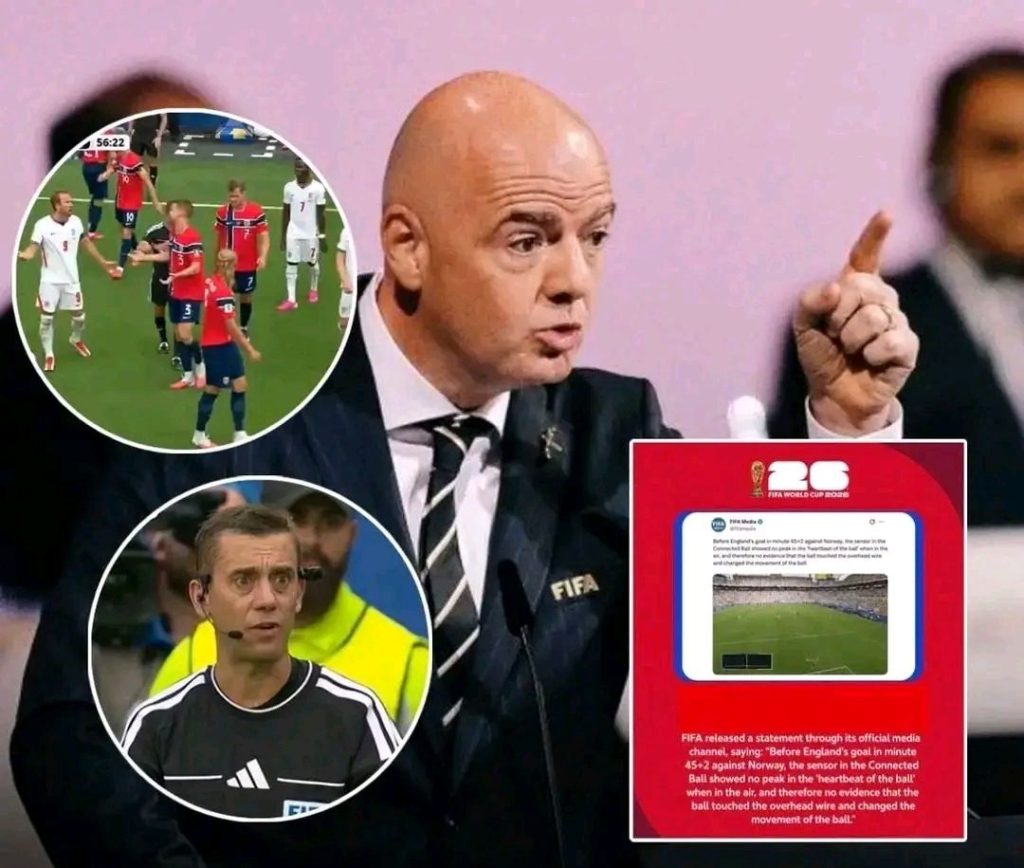
The Bellingham Goal Controversy: FIFA, Infantino, and the Shadow Over England’s World Cup Quarter-Final Victory
England Edges Norway in World Cup Quarter-Final Amid Bellingham Brilliance and Spidercam Controversy
In a pulsating 2026 FIFA World Cup quarter-final showdown in Miami, England survived a fierce Norwegian challenge to secure a dramatic 2-1 extra-time victory, booking a semi-final date with Argentina. Jude Bellingham emerged as the undisputed match-winner with a clinical brace, but the encounter will be etched in tournament folklore as much for a contentious first-half equalizer as for the young midfielder’s heroics.
The Incident That Ignited Debate
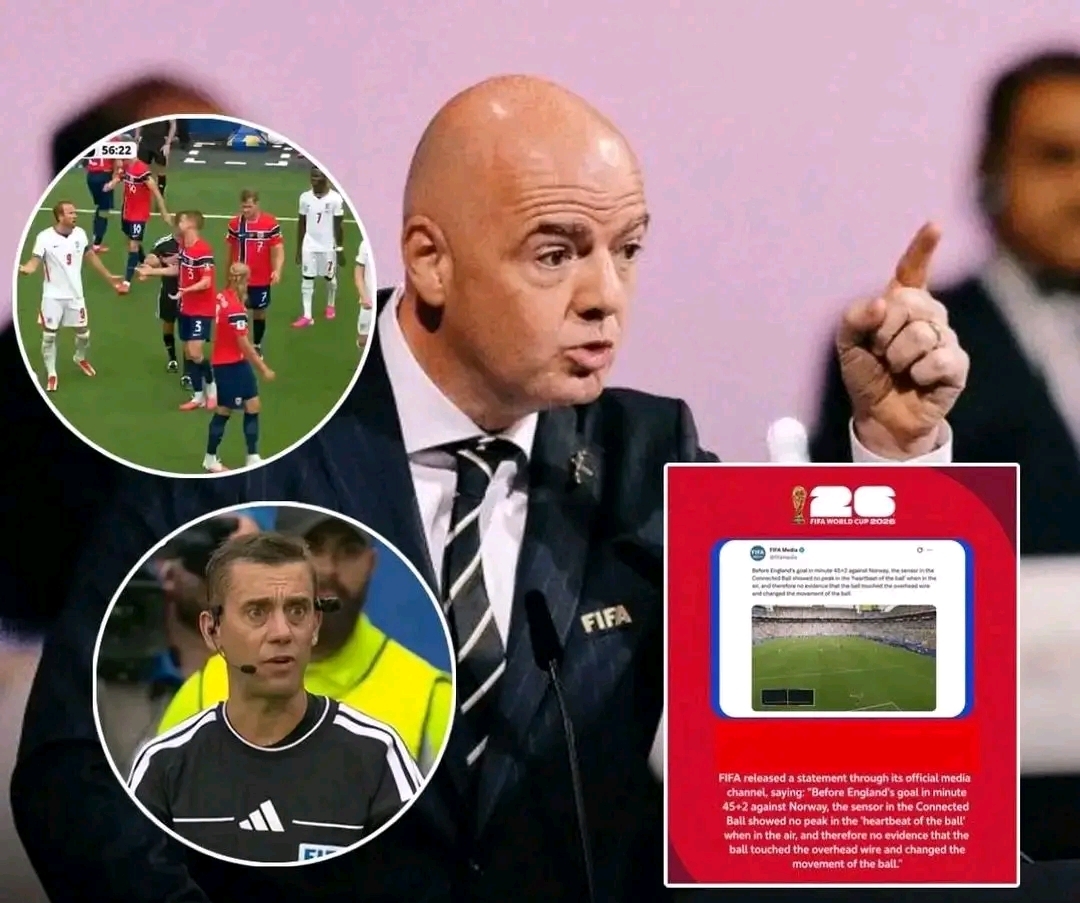
The controversy erupted during first-half stoppage time when England pulled level. Norwegian goalkeeper Ørjan Nyland’s goal kick appeared to strike an overhead camera cable—commonly known as a spidercam or skycam wire—as evidenced by Norway’s immediate protests and certain television replays. The ball seemingly veered off its natural trajectory, dropping short and gifting possession back to England. A rapid exchange between Elliot Anderson and Anthony Gordon culminated in Bellingham calmly slotting home the equalizer.
Norway’s coaching staff and players erupted in fury, gesturing frantically to the referee. Under FIFA and IFAB protocols, any contact with external objects such as camera equipment should prompt an immediate stoppage and a dropped ball restart, similar to instances when the ball strikes the match official. Yet VAR remained silent, and the goal stood, much to the Scandinavians’ dismay.
Head coach Ståle Solbakken later remarked that the incident was “pretty clear” from his vantage point on the bench, observing that the ball fell directly in front of them. However, the Norwegian manager refrained from prolonged complaints, choosing instead to credit his team’s overall display.
FIFA’s Technological Defence
Seeking to quell the uproar, FIFA swiftly released a statement leaning heavily on data from the tournament’s “connected ball” technology. The ball is equipped with a sensor that tracks its “heartbeat,” and according to the governing body’s analysis, “there was no peak on the graph” indicating contact with the overhead wiring that would have altered its flight path. Without definitive technological proof of interference, the referee and VAR had no basis to disallow the goal.
This reliance on sensor data has drawn both praise for its objectivity and criticism for potentially overriding visual evidence. Broadcast replays, including those from FOX Sports, appeared to show a subtle mid-air deviation, fueling the debate over whether cold data should triumph over human observation and multi-angle footage. Former Premier League referee Mark Clattenburg, providing commentary, suggested that VAR should have scrutinized the attacking phase more thoroughly.
The Broader Debate: Technology vs. Tradition
The incident underscores football’s ongoing struggle to harmonize advanced technologies—goal-line systems, VAR, connected balls—with traditional officiating. When these elements appear to clash, disputes inevitably follow. While similar controversies have arisen before involving stadium infrastructure or advertising hoardings, the global broadcast and social media amplification of this particular episode intensified scrutiny to unprecedented levels.
Infantino’s Role: Clarifying the Record
Social media speculation and certain headlines have exaggerated FIFA President Gianni Infantino’s involvement, with some outlets sensationalizing claims of a “strongly-worded statement” or even demands for a rematch. These reports are unfounded. Infantino has issued no such call for replaying the fixture or overturning the result. His recent public commentary has centered on broader governance matters, the independence of FIFA’s judicial bodies, and the importance of respecting decisions amid external pressures.
Infantino’s established approach emphasizes football’s capacity to unite and the necessity of respecting regulatory processes. FIFA’s official clarification on the sensor data represents the organization’s definitive position: the goal was valid, the referee’s decision stands, and England advances. Any suggestion of presidential intervention for a rematch would be both unprecedented and structurally destructive to the tournament’s integrity.
Tournament Context: England’s Resilience, Norway’s Valiant Exit
To appreciate the magnitude, one must consider the broader narrative. Norway arrived in Miami on a wave of momentum, having stunned Brazil earlier in the tournament and showcasing formidable depth anchored by the prolific Erling Haaland. England, despite boasting a star-studded lineup featuring Bellingham, Harry Kane, and others, had historically struggled to translate potential into results on the biggest stage.
After falling behind to Andreas Schjelderup’s opener, England needed a response. Bellingham’s stoppage-time equalizer provided the psychological boost, shifting momentum decisively. Norway pushed relentlessly in the second half, only to see a potential second goal disallowed for a foul involving Haaland. Then, in the 93rd minute of extra time, Bellingham struck again, delivering the knockout blow.
Mixed Reactions and Social Media Firestorm
Post-match reactions were predictably polarized. Norwegian media and supporters voiced outrage over what they perceived as a “scandal,” with some accusing officials of bias. English fans celebrated Bellingham’s clutch performance, while neutral observers debated the VAR non-intervention. Solbakken’s measured response—”I can sit here and cry, but I don’t want to do that”—earned widespread respect for its sportsmanship.
Social media exploded with divided opinions. Clips of the alleged cable contact went viral, spawning hashtags questioning the legitimacy of the result. International pundits and former players weighed in, with Clattenburg among those critiquing the officiating. The Haaland family reportedly expressed their views on social media, adding emotional layers to the discourse. Notably, neither the Football Association nor the Norwegian federation formally appealed the outcome, accepting FIFA’s position while directing focus toward future preparations.
Implications for Technology and Officiating
The spidercam controversy reignites critical questions about pitch-side technology. Spidercams offer dynamic broadcast perspectives but introduce unpredictable variables. FIFA regulations address external interference, yet enforcement hinges on real-time detection. The connected ball sensor aims to provide objective data, but its limitations—potential failure to detect minor contacts or calibration dependencies—warrant ongoing review.
VAR’s role also faces renewed scrutiny. Critics question why the attacking phase wasn’t subjected to more rigorous review. Proponents argue that excessive scrutiny slows the game, while opponents counter that consistency in high-profile incidents is paramount for credibility. This case may prompt FIFA to refine protocols for overhead equipment and sensor integration ahead of future tournaments.
England’s Semi-Final Prospects
England now confronts Argentina in what promises to be a blockbuster semi-final. Bellingham’s electric form makes them a formidable opponent, yet questions persist about defensive vulnerabilities exposed by Norway. For the Norwegians, elimination concludes a dream run but cements their rising status in international football, signaling a bright future.
The controversy may not define the tournament, but it adds to its rich lore, joining the pantheon of disputed moments—Maradona’s “Hand of God,” Lampard’s ghost goal—that fuel endless debate. It encapsulates football’s enduring passion: moments of individual brilliance intertwined with perceived injustices that spark passionate discourse.
Leadership and Governance
Gianni Infantino, FIFA president since 2016, has navigated the organization through reforms, anti-corruption measures, and commercial expansion. His public statements consistently stress unity and procedural integrity. No credible evidence supports claims of Infantino advocating for a rematch—such action would contradict FIFA’s commitment to result finality. Instead, his approach aligns with defending technical decisions transparently.
Conclusion: Lessons for the Beautiful Game
The England-Norway quarter-final perfectly encapsulated football’s emotional spectrum. Bellingham’s double showcased individual brilliance; the cable debate exposed systemic tensions in officiating and technology. FIFA’s swift reliance on sensor data aimed to resolve doubts, though visual ambiguity ensures the discussion will persist.
As the tournament advances, stakeholders must prioritize fairness, transparency, and fan trust. Refinements to camera infrastructure, VAR protocols, and communication could prevent similar disputes in the future. Infantino and FIFA face the perpetual challenge of evolving the sport without sacrificing its traditional soul.
Ultimately, England progresses on merit in a fiercely contested match, yet the controversy reminds us that in football, perception often rivals reality. Norway’s graceful exit and Bellingham’s rising stardom provide positive counterpoints amid the noise. The semi-final beckons, promising more unforgettable moments—controversies included.


 admin
admin