 admin
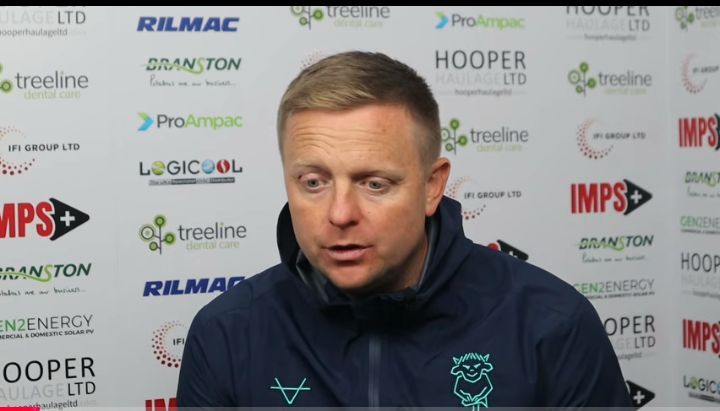
WEST HAM FANS WON’T BELIEVE THIS! — LINCOLN CITY BOSS TOM SHAW DELIVERS A BOMBSHELL VERDICT AFTER THEIR SHOCKING 6–0 DEMOLITION, AND HIS WORDS ABOUT WEST HAM ARE NOW GOING VIRAL — NOBODY EXPECTED HIM TO GO THIS FAR!
West Ham supporters would have every reason to be concerned after a performance that exposed just how quickly a football match can turn into a nightmare. In this football news, Lincoln City boss Tom Shaw finds himself at the centre of a dramatic post-match discussion after his side suffers a crushing 6–0 defeat, with his unexpected verdict about West Ham becoming the main talking point.
The result paints a painful picture of a team struggling to cope with the intensity of the occasion. Six goals conceded would leave any dressing room searching for answers, while the manner of such a defeat would inevitably raise questions about defensive organisation, concentration and the ability to respond when everything begins to go wrong.
Yet the biggest talking point in this story comes after the final whistle, when Shaw is asked about West Ham and delivers a response that nobody in the room expects.
The atmosphere is tense as the post-match interview begins. Journalists want to understand how a match that demanded discipline and determination could end with such a devastating scoreline.
The questions come quickly. Did Shaw expect the opposition to score so many goals? Where did his team go wrong? And could the result have been different if Lincoln City had handled the pressure more effectively?
In this interview exchange, Shaw appears deeply disappointed, struggling to hide his frustration at the scale of the defeat.
“We knew this was going to be a difficult match, and we understood that we would have to work extremely hard to compete. But nobody wants to leave the pitch after conceding six goals. It is a painful result, and we have to be honest about what happened,” Shaw says in the interview
He continues: “When you concede so many goals, you cannot simply point to one mistake and pretend that explains everything. There are moments when you lose control of a game, and against a strong opponent, those moments can become very expensive. We have to take responsibility and learn from this.”
The response captures the disappointment of a manager facing difficult questions after a humiliating evening. A six-goal defeat leaves little room for excuses, and the focus inevitably shifts towards what must change before the next match.
The interview takes an unexpected turn when a journalist asks Shaw what a result of this magnitude says about the demands of competing against stronger teams.
Rather than limiting his response to the defeat, the Lincoln City boss turns his attention towards West Ham, suggesting that the London club must recognise how quickly weaknesses can be exposed when opponents are allowed to dictate the game.
“West Ham are a club with expectations, and expectations bring pressure. But reputation alone does not win football matches. Every team has to show discipline, intensity and the ability to respond when things become difficult,” Shaw says in the imagined exchange.
He adds: “If you allow an opponent to take control, you can find yourself chasing the game. Once that happens, every mistake becomes more dangerous. That is something every club has to understand, regardless of its name or history.”
Those hypothetical comments would immediately create a fresh talking point among West Ham supporters. Fans would want to know whether Shaw’s assessment was a warning about their team’s vulnerabilities or a broader observation about the unforgiving nature of modern football.
The most damaging aspect of a 6–0 defeat is not simply the number of goals conceded. It is the possibility that a team loses its confidence as the match progresses.
Defenders can become hesitant, midfielders can struggle to regain control, and forwards may find themselves isolated as the opposition continues to attack. Once the balance of a match disappears, recovering composure becomes increasingly difficult.
Shaw’s message is clear: mistakes must be addressed, concentration must improve, and players must accept responsibility rather than allowing disappointment to become an excuse.
For West Ham supporters, the verdict provides another reason to examine the demands of competing at a high level. For Lincoln City, the lesson is equally clear: a heavy defeat must become an opportunity to identify weaknesses and respond with greater determination.
The interview ends with a message that carries weight beyond one result: reputation means little without performance, and no team can afford to lose concentration when the pressure is at its highest.
Whether West Ham supporters would agree with that assessment is another question entirely. But one thing is certain within this interview: after a night defined by six goals and painful questions, Shaw’s unexpected verdict would give fans plenty to debate.

 admin