 admin
SFA UNDER PRESSURE AS VAR CONTROVERSY DOMINATES CELTIC-RANGERS DERBY
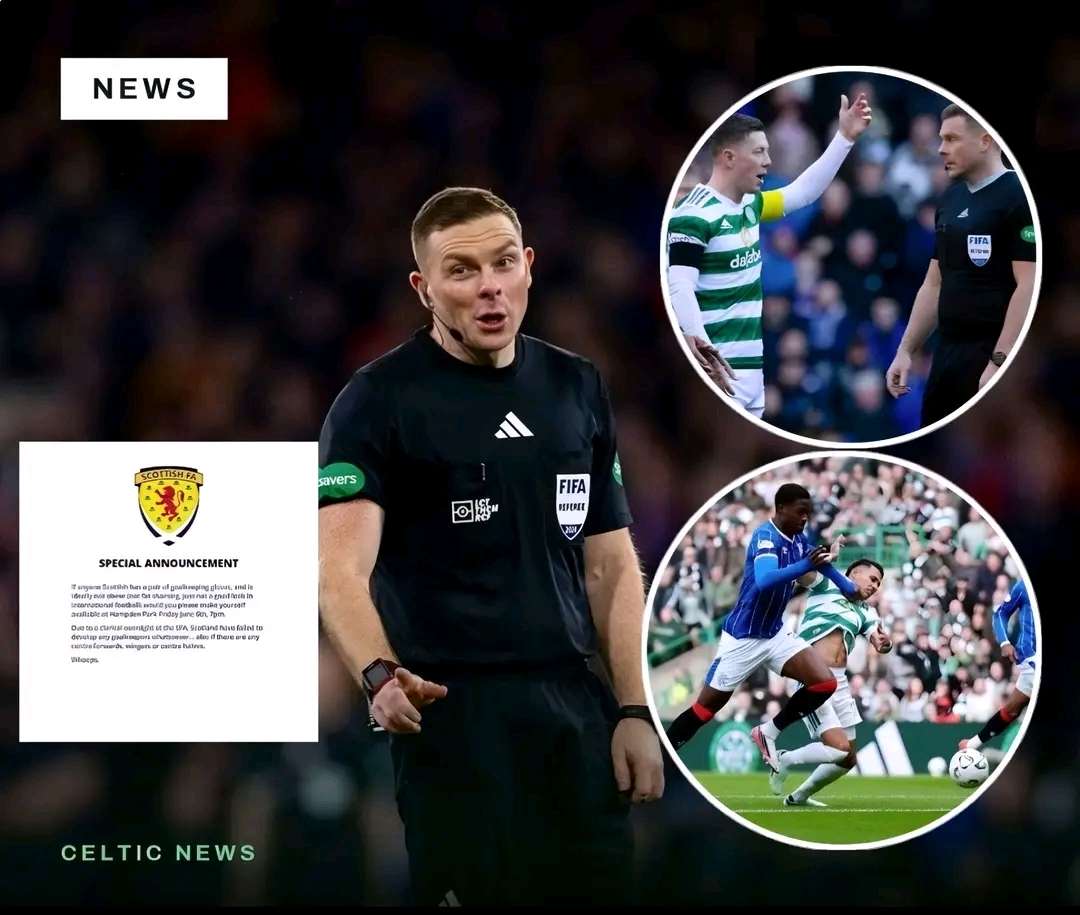
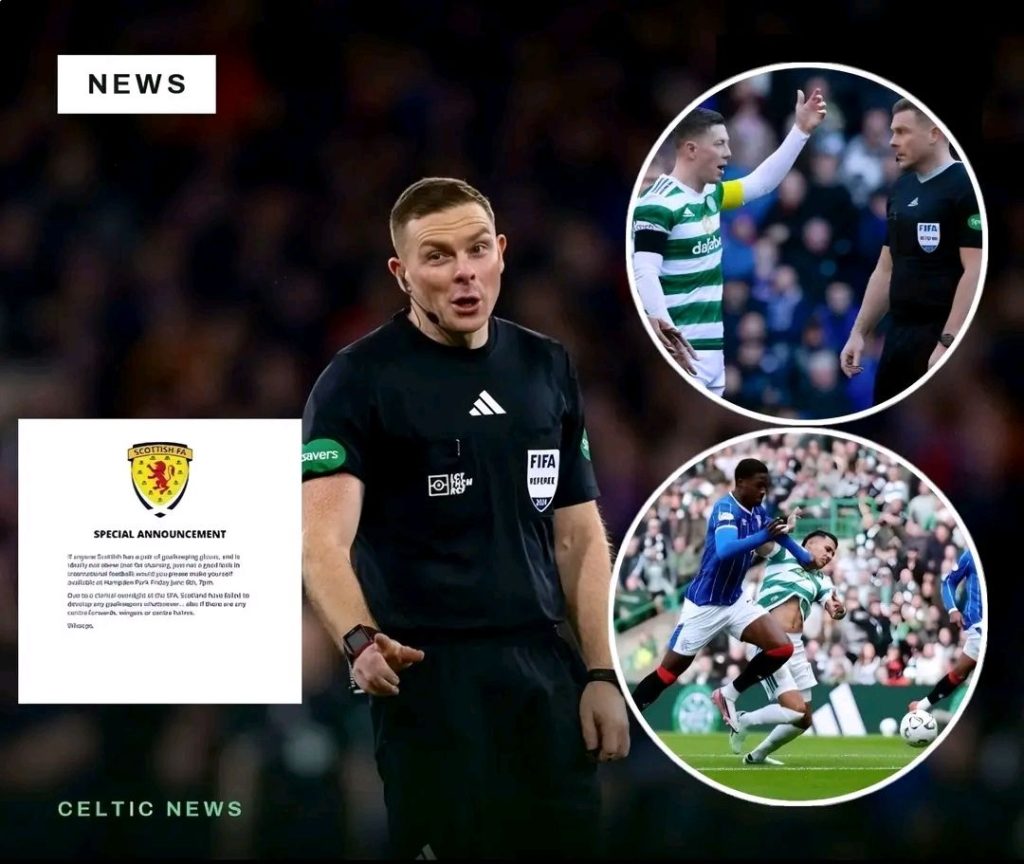
The latest Celtic-Rangers derby has left Scottish football with another major refereeing debate, but the most important question now is whether the Scottish FA will examine the controversial decisions that shaped the match.
Rangers left Celtic Park with a 1-0 victory on Sunday, completing a second Old Firm win over Celtic in the space of eight days and cutting Celtic’s lead at the top of the Scottish Premiership to two points.
Ryan Naderi scored the only goal of the game in the 33rd minute, but the result was accompanied by several contentious officiating moments that have continued to dominate discussion after the final whistle.
John Beaton was the referee, with Nick Walsh operating as VAR and Grant Irvine as the assistant VAR.
The official appointments are confirmed in the match records, meaning any review of the incidents would centre on the decisions made by that officiating team.
For Celtic supporters, one of the biggest frustrations came from the feeling that opportunities were lost during moments when the match could have changed direction.
That frustration has been intensified by the fact that Celtic were already chasing the game after Naderi’s first-half goal.
The Hoops needed a response, but Rangers defended with discipline and continued to make the contest uncomfortable for Martin O’Neill’s side.
One of the most discussed incidents involved Rangers defender Emmanuel Fernandez.
Fernandez had already been booked for a challenge on Camilo Duran, before another incident involving Benjamin Nygren generated strong appeals from Celtic players and supporters.
Celtic wanted a second yellow card and therefore a red card, but no foul was awarded.
Former referees Bobby Madden and Mark Clattenburg subsequently discussed the incident, with both indicating that a yellow card would have been appropriate for the later challenge.
However, because the referee did not award a foul in the first place, VAR could not simply intervene to issue a second yellow card.
That distinction is crucial.
VAR is not a system designed to correct every refereeing decision that supporters believe was wrong.
Its intervention is restricted by the laws and protocols governing reviewable incidents.
That means the debate is not simply about whether a decision was unpopular.
It is about whether the original on-field decision fell within an area in which VAR was legally permitted to intervene.
And that is where the conversation becomes increasingly complicated.
Another major talking point came late in the match when Rangers appeared to score a second goal through Olwethu Makhanya.
The defender produced a spectacular volley, but the goal was disallowed after VAR identified a handball immediately before the strike.
Under the current interpretation of the law, an attacking handball immediately before a goal can result in the goal being disallowed regardless of whether the contact was deliberate.
Former Premier League and FIFA referee Mark Clattenburg supported the decision itself, while also arguing that the handball law remains an area that needs further consideration because of the controversy it continues to generate.
That incident therefore should not simply be presented as evidence that VAR made a mistake.
The available refereeing assessment points in the opposite direction.
The controversy surrounding the derby is broader than one disallowed goal.
Celtic supporters are also questioning whether the overall standard of officiating was consistent enough for such a high-profile fixture.
That concern is understandable in the context of an Old Firm match, where one decision can completely change the rhythm, emotion and tactical direction of the contest.
But there is an important difference between legitimate scrutiny and claiming that officials deliberately favoured one side.
There is currently no verified evidence establishing that the officials intentionally denied Celtic opportunities.
Likewise, claims that officials have already been suspended by the SFA should not be presented as confirmed unless the governing body formally announces such action.
What can be said is that the controversy has created pressure for scrutiny.
The SFA has previously taken disciplinary action against football figures who publicly criticised officials and VAR decisions.
Derek McInnes himself was given a four-match suspension earlier this year after comments about a controversial Celtic penalty while he was Hearts manager, although his immediate ban was later reduced following an appeal.
That history makes the current debate particularly sensitive.
Scottish football has repeatedly found itself caught between two competing demands.
Supporters want officials to be accountable when serious mistakes occur, while referees also need protection from personal attacks and accusations that go beyond the available evidence.
The challenge for the SFA is therefore not simply to react to social-media outrage.
It is to establish whether the decisions complied with the laws, whether VAR protocols were correctly followed and whether any further action is warranted.
That distinction matters because Celtic’s defeat cannot realistically be explained entirely through refereeing.
Rangers were organised, aggressive and disciplined.
They scored through Naderi in the first half and managed the remainder of the match effectively.
The official match report confirms that Rangers secured the 1-0 victory and that Makhanya’s later effort was disallowed for handball.
Celtic also struggled to create sustained attacking pressure.
The defeat was their first Scottish Premiership loss of the season, and it followed another defeat against Rangers in the League Cup.
That makes the result significant independently of the refereeing debate.
For O’Neill, the pressure is now about more than one controversial decision.
For Rangers, meanwhile, the victory represents another statement of progress under McInnes.
The Light Blues have now beaten their rivals twice in eight days, turning what could have been a damaging period into a major boost for their league campaign.
Yet the officiating controversy refuses to disappear.
That is because football supporters rarely remember only the scoreline.
They remember the moment when a potential red card was not shown.
They remember the goal that was ruled out.
They remember the challenge that could have changed the momentum.
And they remember whether the authorities eventually explained what happened.
That is why the next step from the SFA matters.
If there is a formal review, supporters will expect transparency about the decisions rather than vague statements.
If the officials are found to have followed the laws and VAR protocol correctly, that should also be communicated clearly.
And if genuine procedural errors are identified, Scottish football will reasonably expect lessons to be learned.
But until such findings are officially established, claims of suspensions or deliberate wrongdoing remain claims rather than facts.
The Old Firm rivalry is already intense enough without turning every controversial decision into an accusation of corruption or bias.
The real issue is accountability.
VAR was introduced to reduce major errors, not to eliminate every disagreement surrounding refereeing.
Sunday’s Celtic-Rangers derby has once again demonstrated just how difficult that objective remains.
Rangers have the victory, Celtic have the questions, and the SFA now faces the pressure that comes whenever a major Scottish football match becomes dominated by decisions rather than the football itself.
For Celtic supporters, the frustration will not disappear simply because Rangers won.
For Rangers supporters, the victory will not be diminished simply because controversial incidents are being discussed.
And for Scottish football, the biggest test is whether the authorities can examine the key moments objectively and provide supporters with a clear explanation.
That is ultimately what this controversy is about.
Not choosing sides.
Not declaring officials guilty before an investigation.
Not rewriting the result.
It is about ensuring that when the biggest match in Scottish football produces the biggest questions, the people responsible for the game’s administration are prepared to provide the answers.


 admin


